search expand

“Racist” Buddhist monks hope for “ethnically clean” Tibet?

In his post Not only freedom: the dark ethnic side of the Tibetan Buddhist revolt, anthropologist Gabriele Marranci challenges mainstream images of Tibetans as peaceful and writes about Tibetan racism, ethno-nationalistic dreams, and attacks against muslims in Tibet.

Both the mass media, academics, and even anthropologists specialised in Tibetan Buddhism, have hidden what Marranci calls the ‘dark ethnic side’ of the revolt.

The Muslims in Tibet have been the target of Buddhist Tibetan violence for some time now, especially since 9/11. During the recent protests in Tibet there were anti-muslim attacks:

The mosque in Lhasa was burnt and destroyed, shops and the possessions of Muslim Tibetans smashed, a family burned alive in their own shop, terror and terrorism have affected this community because of a pernicious form of ethnic (Buddhist) nationalism

Marranci points to the paper Close Encounters of an Inner Asian Kind: Tibetan-Muslim co-existence and conflict in Tibet past and present by Andrew Fischer. According to Fischer, the tensions are primarily the cause of ‘economic’ differences and opportunities:

During the 1990s Ethnic Tibetan Buddhist started to fear that the economic success of Muslim Tibetans (particularly their restaurants and shops), would have undermined the economic, and so social, status of the Buddhist Tibetans. The Buddhist monks began a campaign against the economic activities of Tibetan Muslims, which epitomised in the 2003 boycott of Muslims’ businesses and saw also violent actions against innocent Muslim Hui families

Marranci writes:

Since the beginning of the revolt in March, demonstrations against China are held in all those countries through which the Olympic torch is passing. From the politicians, to the public, from Hollywood to Bollywood, from the scholars (with few exceptions) to the students, from the Trade Unions to the Industrial associations: all show indignation against the ‘oppression of the Chinese government’. Yet they ignore the dark side of this ‘revolt’ which is not so different from that in 2003.
(…)
Meanwhile monks and lamas are just stoking the fire in the hope of not just a free Tibet but also an ethnically clean one!

>> read the whole post on Marranci’s blog

SEE ALSO:

The special thing about the Tibet protests

In his post Not only freedom: the dark ethnic side of the Tibetan Buddhist revolt, anthropologist Gabriele Marranci challenges mainstream images of Tibetans as peaceful and writes about Tibetan racism, ethno-nationalistic dreams, and attacks against muslims in Tibet.

Both the mass…
Read more

16 articles on Migration and Transnationality in Anthropology News May

Articles on Biometrics, US Refugee policy, children’s migration, transnational students, challenges of multi-sited ethnography and more can be found in the most recent issue of Anthropology News May, a publication by the American Anthropological Association (AAA).

16 articles can be downloaded!

Additionally, we find a photo essay and a photo gallery (Anthropology News is on flickr!)

>> visit Anthropology News

UPDATE: See also Maximilian Forte’s comments on the article about multisited ethnography

Articles on Biometrics, US Refugee policy, children's migration, transnational students, challenges of multi-sited ethnography and more can be found in the most recent issue of Anthropology News May, a publication by the American Anthropological Association (AAA).

16 articles can be…

Read more

Maurice Bloch: Religion is a Figment of Human Imagination

Why did religions evolve? According to anthropologist Maurice Bloch, there is nothing special with religion. It’s just a product of human imagination – in the same way as nations are, Bloch writes in an article to be published in June, the New Scientist informs.

The development of religion is dependent on the development of imagination. We had to evolve the necessary brain architecture to imagine things and beings that don’t physically exist, and the possibility that people somehow live on after they’ve died, Bloch argues according to New Scientist:

Once we’d done that, we had access to a form of social interaction unavailable to any other creatures on the planet. Uniquely, humans could use what Bloch calls the “transcendental social” to unify with groups, such as nations and clans, or even with imaginary groups such as the dead. The transcendental social also allows humans to follow the idealised codes of conduct associated with religion.

“What the transcendental social requires is the ability to live very largely in the imagination,” Bloch writes.

“One can be a member of a transcendental group, or a nation, even though one never comes in contact with the other members of it,” says Bloch. Moreover, the composition of such groups, “whether they are clans or nations, may equally include the living and the dead.”

(…)

“Once we realise this omnipresence of the imaginary in the everyday, nothing special is left to explain concerning religion,” he says.

>> read the whole story in the New Scientist

Bloch has recently been interviewed in Vikerkaar / Eurozine and was presented as an anti-anthropologist: “It may well be that anthropology departments disappear, and that wouldn’t bother me very much”, he said.

UPDATE Maximilian Forte has written a summary of the interview with Bloch, see Maurice Bloch: “Reluctant Anthropologist” or “Anti-Anthropologist”?

See also the tutorial Anthropology and Religion

Why did religions evolve? According to anthropologist Maurice Bloch, there is nothing special with religion. It's just a product of human imagination - in the same way as nations are, Bloch writes in an article to be published in June,…

Read more

Webutvikling: Antropologer sørger for vekst

“Webbureau i vækst-hopla: Hyr en antropolog” skriver Computerworld. ”Antropologer lyder måske lidt eksotisk, men de er meget vigtige for et af vores vækstområder, nemlig servicedesign,” sier Morten Pedersen fra nettselskapet 1508.dk.

1508 har blant annet brukt antropologer i arbeidet med den nye version av den offentlige informasjonsportalen Virk.dk. Antropologer ble sent ut på feltstudier i bedrifter for å undersøker hvordan de bruker verktøyene som 1508.dk stiller til rådighet.

>> les hele saken i Computerworld

SE OGSÅ:

IT-bransjen vil ha antropologer

Why the head of IT should be an anthropologist

Popular IT-anthropologists: Observe families until they go to bed

"Webbureau i vækst-hopla: Hyr en antropolog" skriver Computerworld. ”Antropologer lyder måske lidt eksotisk, men de er meget vigtige for et af vores vækstområder, nemlig servicedesign,” sier Morten Pedersen fra nettselskapet 1508.dk.

1508 har blant annet brukt antropologer i arbeidet med…

Read more

Organdonasjon skaper nye slektskapsbånd

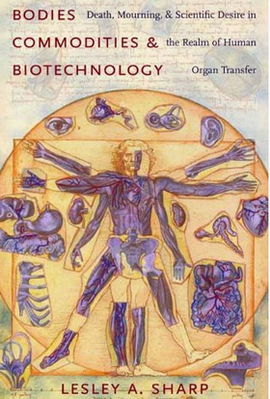
cover

Hvordan er det å leve med et fremmed hjerte? Båndene mellom organmottakere og pårørende til organdonorene kan bli sterke og nye ritualer har oppstått, skriver antropolog Lesley Sharp i en ny bok, skriver Svenska Dagbladet.

Egentlig skal de jo ikke vite om hverandre. Donoren skal alltid være anonym. Men som Sharp skriver i boka Bodies, Commodities and Biotechnologies: Death, Mourning and Scientific Desire in the Realm of Human Organ Transfer oppsøker organmottakere og pårørende til organdonorene hverandre for å bearbeide sine minner og tanker. De omtaler hverandre om “min nye familie”. Nye organdonasjonsfamilier har oppstått og nye seremonier for å hedre donoren og “gjenfødselen”.

Boka handler også om handelen med kroppsdeler. Kroppen er i økende grad blitt en vare.

>> les hele saken i Svenska Dagbladet

>> Utdrag av boka

SE OGSÅ:

Organdinasjon: Kulturen skapar nya gränser för liv och död

Anthropology professor working on organs trafficking

Doktorgradsprosjekt: Foreldreskap i bio- og genteknologiens tidsalder

cover

Hvordan er det å leve med et fremmed hjerte? Båndene mellom organmottakere og pårørende til organdonorene kan bli sterke og nye ritualer har oppstått, skriver antropolog Lesley Sharp i en ny bok, skriver Svenska Dagbladet.

Egentlig skal de…

Read more