search expand

Five more interviews on cultural complexity!

One of my jobs consists in interviewing researchers in the research program Cultural Complexity in the new Norway. Five of these interviews have been translated into English, I’ve just put them online:

Traveling to Turkey to Understand Norway
Anthropologist Therese Sandrup is interested on focusing on the strong emotional connection the second generation in Norway has to their parents’ native country: “It is important to look at the migration process in its entirety. Certain actions and decisions are the result of a dialogue between the past and the present, the country of origin and the Norwegian context,” she says.

Doing Fieldwork Among Poets and Rebels in Paris
Anthropologist Cicilie Fagerlid had actually intended to study peaceful cosmopolitan existence in Paris. But a month after she had relocated there, riots broke out in the suburbs. This research fellow now wants to find out why France ended up in this situation – in large part by studying the poetry slam scene.

Does the Labor Movement Tackle Cultural Complexity?
In the 1970s, The Norwegian Confederation of Trade Unions (LO) struggled with integrating women and new occupational groups. Margrethe Daae-Qvale believes the same is now happening with immigrants. In connection with her Master’s thesis, she has interviewed immigrants who have been active in the trade union, together with central participants within LO’s forum for ethnic equality.

Gender Roles Among Christians and Muslims: Shared Problems and Shared Solutions?
Do Christians and Muslims face common challenges, or are they so distant from each other that communication becomes impossible? In order to answer these questions, the theologian Anne-Hege Grung has formed a dialogue group with Christian and Muslim women. They are meeting to discuss texts from the Bible, the Koran and Hadith.

Revealing Media Habits Among Norwegian-Iranians
In studying media habits among Norwegian-Iranian people, sociologist Sharam Alghasi wants to comment on the relationship between Norwegians and Iranians. “You cannot consider yourself to be Norwegian if you feel you are excluded from Norwegian society through the media”, he says.

One of my jobs consists in interviewing researchers in the research program Cultural Complexity in the new Norway. Five of these interviews have been translated into English, I've just put them online:

Traveling to Turkey to Understand Norway
Anthropologist Therese Sandrup is…

Read more

Hjemme bra, men borte best? – Fagkritisk dag om feltarbeid

Skrevet og fotografert av Sofia Josefine Spjuth (UiO) for antropologi.info
panel
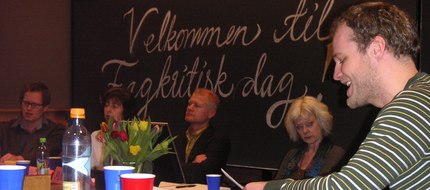
Torgeir Kolshus, Marianne Lien, Halvard Vike, Marit Melhuus, Johannes Elgvin

Fler och fler masterstudenter väljer att stanna i Norge för att utföra sitt fältarbete här. En del har mött motstånd då projektbeskrivningen lämnats in till institutet, och några har därmed slutligen genomfört sitt fältarbete med förändrad tematisk och regional utgångspunkt.

28:e mars var det dags för ”Fagkritisk dag” på det samhällsvetenskapliga fakultet vid universitetet i Oslo. Föreningen ”Sosialantropologisk Forum” hade spikat ett program för sina medstudenter i fem och en halv timma med kortare föredrag, filmvisning och debatt i ett av auditorierna på deras fakultet.

Över hundra stycken lockades dit av dagens tema, som problematiserade möjligheterna och utmaningarna kring att göra fältarbete i Norge som eget land. Detta tema var bestämt av socialantropologisk studentorganisation bland annat på bakgrund av en skepsis och ambivalens som verkat råda på institutet angående denna fråga.

Hva (i all verden) er antropologi hjemme?

Först ut i talarstolen var professor Halvard Vike. Han öppnade med frågan om huruvida ”hemma antropologi” faktisk anses vara av andra rang på institutet? Det råder absolut inte en allmän hållning om detta, försäkrade Vike oss om, men medgav att det dock kan medföra viss problematik. Det är en väsentlig del att våra studenter reser ut i världen, ”kulturchockens epistemologi” som vårt ursprung, upplevelsen av ”att bli barn på nytt” är kanske inte helt att undgå som viktig, menade han.

Men vad betyder egentligen ordet hemma? Och vad lägger vi i det? Vike problematiserade frågan och lyfte exempelvis fram hur många studenter som finner det intressant att studera bönder på höglandet i Guatemala, medan intresset för att studera bönder i Bø fort kan verka tråkigt i kraft av att vara i Norge. Det är den radikala nyfikenheten för mänsklig anpassning som bör vara den grundläggande faktorn för var i världen studenterna väljer att genomföra sina fältarbeten.

Att det finns tendenser till att norska kulturfenomen inte ses på som lika intressanta inom antropologin tror professor Vike främst är en hållning bland studenterna själva.

Något av den problematik han lyfte fram knytet till dagens tema handlade om den alltid så viktiga holismen, och pekade på tendenser till att man lättare ger avkall på den holistiska motivationen när man är ”hemma”. Det är viktigt att röra sig upp och ner, fram och tillbaka i fältet och inte bara se de institutionella gränserna. På detta sätt kan antropologen, med sin absoluta särställning, vara med på att omformulera frågor till den norska välfärdspolitiken som andra forskare inte har kunskap om. Denna klasserfarenhet, att aktivt gå på tvärs av kontexter, kan vara en ersättning för ”kulturchocksepistemologin” liksom det att tillnärma sig en historisk blick eller tänka kontrafaktiskt.

Vike ser stor potential i ”hemma antropologi”, och med hjälp av dessa tre sistnämnda hjälpmedel kan vi vara med på att spränga ortodoxa barriärer och sprida kunskap om den enorma komplexitet Norge som etnografiskt fält har att erbjuda.

”Longing for belonging”

Dagens film var baserad på ett fältarbete i Havøysund i Finnmark, Norge. Denna flotta filmatisering av Beate Mortensen Nesheim var ett glimrande bidrag till dagens tema. Kvinnan bakom kameran tog oss med till sin hembygd, fiskeværet Havøysund. Med sitt eget ursprung från platsen, och sitt genuina intresse för problematiken små kust samhällen i Finnmark idag sliter med, visade hon oss ett starkt bidrag till ”hemma antropologin”. ”Longing for belonging” gav oss bilder av en plats betydelse för skapa identiteten av den man är den man är, och blir den man blir. Drömmar, förväntningar, bekymmer och hemlängtan återspeglas i vardagens problematik till olika människor (hele filmen kan lastes ned)

”Behovet for å eksotifisere”

Professor Geir Thomas Hylland Eriksen talade inte bara om en eventuell problematik kring att göra fältarbete i eget land, utan även om socialantropologins ställning i en allmännare forskningskontext.

Han menade att det inte är något tvivel om socialantropologins goda renommé inåt i den fackliga miljön, värre är det däremot utåt. Anledningen till detta är att vi helt enkelt är för dåliga på att visa, och inte minst klargöra för andra vad vi faktiskt kan.

För det är inget tvivel om att det är mycket vi kan bidra med, men det kommer inte till sin nytta om vi bara låter det frodas i akademins värklighet. Alla vetenskapliga discipliner har sin speciella fokus för att kunna förklara komplicerade fenomen, och det antropologen kan bäst är komplexitet. Detta kan verka nog så förvirrande och diffust i en värld på söken efter enkla förklaringsmodeller.
salen
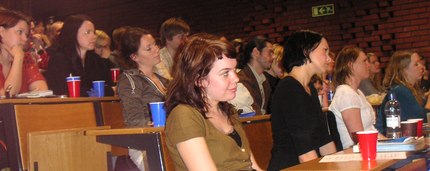
Över hundra stycken lockades till Fagkritisk dag

Hylland Eriksen fick så en fråga om han kunde ge något tips till vad studenter som väljer att göra fältarbete i Norge borde fokusera på. Det klara svaret var att kanske slita sig något från etnicitet som tema och heller fokusera mer på ekonomi. Arbetslöshet är ett viktigt och intressant fält att ta tag i. Det är tydligen få ting som gör oss olyckligare än att bli just arbetslösa, och detta fenomen menar han att kan antropologer kan vara med att förklara.

”Nærest er du når du er borte… noe er borte når du er nær”

Dagens tredje inlägg hölls av professor Marit Melhuus. Strofen ovan är hämtad ifrån en dikt av Tor Jonsson, och lästes inledningsvis av Melhuus:

”Nærast er du når du er borte.
Noko blir borte når du er nær.
Dette kallar eg kjærleik – Eg veit ikkje kva det er.
Før var kveldane fylte av susing frå vind og foss.
No ligg ein bortgøymd tone og dirrar imellom oss.”

Hon pekade till problematiken kring det samtidiga krav som ställs till antropologer om närhet och avstånd i forskningsmetoden. Angående ”hemma antropologi” är problemet inte närheten men snarare avståndet enligt Melhuus. Alla norrmän i Norge delar vissa referensramar, vilka på så vis kan vara svåra att definiera och därmed analysera. Hon menar att när man reser ut i världen är det just mötet med, och upptäckten av andras referensramar som kan förlösa en förståelse av ett fenomen.

Därmed tror Melhuus att det är stor fara för att man inte problematiserar sammanhänget och kontexten nog när man delar samma referensramar. Ett sätt att undgå en sådan förödande miss är att lägga fältarbetet till en mer avgränsad by, och på så vis genomföra ett mer ”traditionellt” fältarbete. Detta vill underlätta för att följa folk tätare, i olika kontexter, och på så vis kunna säga något om viktiga referensramar till dem man studerar. Poängen är att det i mer urbana kontexter är det svårare att kontrollera om folk faktiskt gör det dem säger att dem gör.

”Går man glipp av noe essensielt ved å gjøre feltarbeid i eget land?”

Tillslut var det alltså dags att debattera om huruvida man år miste om något essentiellt vid att inte resa utanför rikets gränser. Panelen bestod av Torgeir Kolshus, Marianne Lien, Marit Melhuus och Halvard Vike.

Dem hade på förhand fått besked om att positionera sig något, för eller emot, men de flesta hade gett besked om att det inte var möjligt. Detta faktum genomsyrade hela debatten, och talade för sig självt om att det både finns positiva och negativa sidor med att göra fältarbete ”hemma”.

Det är viktigt att våga gå bort från det man är van vid, våga göra bort sig och utmana svåra situationer. Fältarbete är hårt arbete som kräver insats och enorm vilja att förklara fenomen kring mänsklig anpassning.

Inspel från publiken visade även hur det motsatta, nämligen hur det att välja speciellt kända fält och tema, varit utslagsgivande för tillgång och acceptans i fältet. Så var det även frågan om huruvida främmande språk kan verka givande som medel för att distansera sig, och skona sig från ”hemma blindhet”. Några menade att studenterna kanske borde skriva på engelska om dom väljer att göra fältarbete i Norge, medan flera i publiken argumenterade för det motsatta.

Därmed återstår det för oss att fördjupa oss i de texter antropologer redan producerat, slipa vår nyckel till komparation och bege oss ut i fjordarnas rike och frossa i oförklarliga fenomen, som bara väntar på att förklaras genom antropologens närvaro.

SE OGSÅ:

– Kvalitetsreformen truer antropologifaget

Etter kvalitetsreformen: Like bra feltforskning på kortere tid?

Drar til Tyrkia for å forstå Norge

For en antropologi uten radikal annerledeshet

Etnografi om unge kunstnere: Hvordan ser verden ut fra deres ståsted?

Hvorfor så konforme journalister? Antropolog på feltarbeid i rikspressen

Feltarbeid i egen stue

Studenter på feltarbeid for å designe espressomaskiner og lekeplasser

Anthrobase: Fieldwork at home & abroad

panel

Skrevet og fotografert av Sofia Josefine Spjuth (UiO) for antropologi.info

Torgeir Kolshus, Marianne Lien, Halvard Vike, Marit Melhuus, Johannes Elgvin

Fler och fler masterstudenter väljer att stanna i Norge för att utföra sitt fältarbete här. En del har mött motstånd…

Read more

Thesis: How does EU influence the life of farmers in Finland?

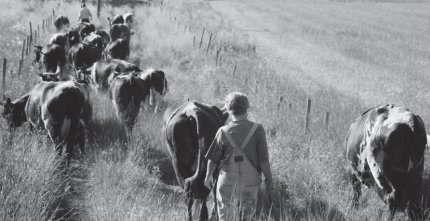
farmers

Why see uncertainty as a hindering aspect of human experience, instead of an enabling one? In her thesis Good Lives, Hidden Miseries: An Ethnography of Uncertainty in a Finnish Village, anthropologist Susanne Ådahl from the University of Helsinki argues that there can be something called “good suffering”, a suffering which creates positive meaning and creative action:

There is a reason why people continue doing things, working, producing on the land, maintaining sociality and community although a lot of it goes against all economic logic. For farmers it is not only a matter of being engaged in practical action, but that the action has a quality of “meaningfulness” to it.

Her thesis is an ethnographic study, in the field of medical anthropology, of village life among farmers in south west Finland, based on 12 months of field work conducted 2002-2003 in a coastal village.

Ådahl asked people about their life histories, the meaning of the home, work, social solidarity and social interaction, notions of illness and well-being. She was primarily interested in finding out how people experience social change and what they do to deal with it. And by working with farmers she “came to understand the central symbols of farming life and the impetus that keeps these people going although outside forces are reducing their living space, both symbolically and literally”.

When she started her fieldwork Finland had been a member of the European Union for seven years, and farmers felt the EU had substantially impacted on their working conditions, she writes:

Perhaps one of the greatest losses they are experiencing is that of their autonomy, the freedom to decide over life which seems to be equivalent to a loss of honour, and an honourable way of dealing with the dependence on structures beyond their control. It is also a potential loss of the home. There was complaint of other pressures in life such as work related stress, the fast pace of life and strained inter-personal relationships. Informants expressed worry over the ingestion of artificial foods and other harmful substances in the environment.

Felt uncertainty in their lives is brought about by increasing social isolation, feelings of depression, anxiety, guilt and distress. A concrete sign of the structural changes that are taking place in society is the emptying of villages.

(…)

The introduction of on-farm inspections and with it the issue of doubt and distrust that is inherent in this practice is perhaps one of the hardest blows to farmers’ pride. They feel that a bureaucratic entity has penetrated into the sanctity of the home, transgressing boundaries of intimacy. Many also equate the present subsidy system with social welfare, living off a system, losing your independence. This has resulted in a loss of motivation to produce, because the reward for being a good farmer, one that strives to maximise his or her yields, is gone.

(…)

They feel that decision makers and representatives of the EU cannot understand, nor recognise the significance of local level knowledge, based in the reality of farming in Finland as well as the geographically specific areas of the country that “good farming practice” is based on.

In the midst of constraints and the demands to mould oneself to the social order there are also minimal forms of resistance, like writing “No EU” in bricks of contrasting colours on the roof of one’s barn. Or being active in a producers’ organisation, in municipal or party politics so as to influence the outcome of political decisions that impact on one’s life:

One of the most obvious forms of resistance is related to the “cancer talk” that people engage in. It is used as a political commentary of the state of affairs, of people’s fear of something foreign controlling their lives. It is a form of blaming society for making their living environment dangerous to dwell in and their food contaminated, and yet they keep on living in this environment.

So why can suffering be good and meaningful? The anthropologist explains:

For farmers it is natural to think that the importance of producing food makes their suffering meaningful, valuable and honourable. This positive, meaningful suffering produces wholesome food that feeds the nation and maintains our independence in terms of food security.
(…)
It is through working and being active in associations and other social activities that farmers can fulfil the central values of the farming life, those of continuity regardless of how economically unprofitable it has become to engage in farming especially for small holders. Farmers make the ambiguity of their lived realities understandable by referring to these core values that spring from the local context.
(…)
I believe that the central role of agency in the lived experience of human subjects emerges precisely because it is set against the backdrop of suffering, of the idea that those things which are at stake in one’s life are threatened.

>> download the thesis

Her reserach was part of the research project Ethnographies of Illness Experience in Contemporary Finnish Contexts that has published three medical anthropology papers online.

The picture was taken from her thesis.

SEE ALSO:

Local Foods – New issue of Open Access journal “Anthropology of Food”

Crop Diversity Continues Thanks to Modern, Traditional Practices

Thailand: Local wisdom protects hometown from the onslaught of globalisation

farmers

Why see uncertainty as a hindering aspect of human experience, instead of an enabling one? In her thesis Good Lives, Hidden Miseries: An Ethnography of Uncertainty in a Finnish Village, anthropologist Susanne Ådahl from the University of Helsinki argues that…

Read more

AIDS:”Traditional healers are an untapped resource of great potential”

In a recently published doctoral dissertation at the University of Helsinki, anthropologist Perpetual Crentsil provides 13 recommendations on how to fight AIDS. Crentsil has been on fieldwork among the Akan in the coastal south and forest zone of Ghana:

It seems reasonable to expect that where deaths from AIDS are common, people would be worried and would attempt to prevent infection by abstinence or protecting themselves. However, new infections indicate that campaigns to educate and create more awareness are not having the optimal effect.

The ill effects of the disease necessitate a radical approach, Crentsil writes and suggests among other the following measures:

– Campaign strategies need radical changes in order to portray their urgency in sending strong messages about the seriousness of the disease. Alternative modes of educating people could be adopted, such as the use of traditional or supernatural concepts — ‘bad’ death and non-creation of ancestors.

– There should be more posters and billboards about the disease. Owing to the high level of non-Western education in the rural areas, the posters should be more pictorial than textual. Again, as this study found, the posters seem to be concentrated in the cities and major towns. More need to go to the rural areas too.

– It is important that pharmaceuticals make the medication for HIV/AIDS cheap enough for poor countries; in this way biomedicine would claim more control over other medical systems.

– Traditional healers are an untapped resource of great potential, as I have suggested elsewhere (Crentsil 2002). They could be integrated into the country’s medical system, properly regulated and redefined to provide important outlets for networks dedicated to the campaign against HIV/AIDS in remote areas. After all, the model of the ‘health care system’ is meant to be universally applicable.

(…)

– The role of the media is important. (…) My observations in the field were that even in the urban areas where many people have television sets, the majority choose to watch music and drama instead of HIV/AIDS programmes. Although not statistically proven, it is believed that people find HIV/AIDS programmes too boring. Soap operas on HIV/AIDS could be encouraged by the media houses. (…)

– The family needs to reform itself as a socialising unit. Parents should be able to speak against their children’s questionable lifestyles. In this period of risks of infection, the lineage needs to assume its role as what I call an informal ‘health promotion agency’ by conducting thorough investigations of prospective partners for their young members. This, in my opinion, could be a major deterrent to many young people who may be engaging in unhealthy lifestyles.

(…)

– I support the churches’ insistence on HIV test before they conduct marriage between couples, if that will make people sit up. I suggest that churches (the spiritualist ones and others) should make issues about the disease a major part of their preaching in worship sessions. (…) I support abstinence by those who are not married (not merely because I am a Catholic). For married couples, being faithful should be a strong message to them. It is only when abstinence and fidelity cannot be practised that people would need to adopt the condom culture.
(…)

>> download the thesis

SEE ALSO:

Male circumcision prevents AIDS?

The emerging research field of medical ethnomusicology: How music fights AIDS

“There’s no AIDS here because men and women are equal”

Cultural values and the spreading of AIDS in Africa

In a recently published doctoral dissertation at the University of Helsinki, anthropologist Perpetual Crentsil provides 13 recommendations on how to fight AIDS. Crentsil has been on fieldwork among the Akan in the coastal south and forest zone of Ghana:

It…

Read more

For Open Access: “The pay-for-content model has never been successful”

Open Access to anthropology journals? “How to find the money to publish journals if one doesn’t make readers pay?”, opponents of Open Access would ask. But as Alex Golub explains in an article in Anthropology News April: The “reader-pays” model for funding publications (f.ex. membership fees) by the American Anthropological Association has been broken for a long time. “The choice we are facing”, he writes, is not that of an unworkable ideal versus a working system. It is the choice between a future system which may work and an existing system which we know does not”:

The AAA can develop a publishing program that can run in the black, but in order to do so it must take on board the central insight of the open access movement—that journals become more affordable (and open access becomes a more realistic option) when you lower production costs.
(…)
Advocates of open access argue that we can reduce the production costs of journals by up to two orders of magnitude by using free open source software to edit them, and using small-run printon-demand solutions. These cost savings could then be used to free journals from having to charge readers to view their content.
(…)
In order for us to develop less costly and more open publishing, we need to question some of our assumptions about how our publishing program works and how successful it has been.
(…)
It means moving beyond the idea that our current reader-pays model is somehow more “realistic” than open access alternatives.

Golub also criticizes the decision making process within the AAA. Although the AAA should have redesigned their website in time for the San José meetings in November 2006, nothing has happened yet:

If we can not redesign our website in a timely manner, how are we to reinvent our publishing program in a electronic age?

>> download the article (pdf, 125MB )

>> discussion on this article Savage Minds

SEE ALSO:

2006 – The Year of Open Access Anthropology?

New Open Access Anthropology Website, mailinglist, chat and t-shirts!

Open Access: “The American Anthropological Association reminds me of the recording industry”

Success in publishing defined by quality? Anthropology Matters on “The Politics of Publishing”

Open Access to anthropology journals? "How to find the money to publish journals if one doesn’t make readers pay?", opponents of Open Access would ask. But as Alex Golub explains in an article in Anthropology News April: The “reader-pays” model…

Read more