search expand

Forscher widerlegen Sarrazin in neuem Report

Sarrazins Thesen auf dem Prüfstand (pdf) heisst ein neuer Report, in dem ein Team aus Politologen, Sozialwissenschaftlern, einem Islamwissenschaftler und einer Ethnologin die Aussagen von Thilo Sarrazin über Muslime in Deutschland widerlegen.

Den Forschern der Humboldt Universität in Berlin geht es im Report in erster Linie um Fakten und weniger um Sarrazins Weltbild (als alternatives Projekt könnte man evt Sarrazins Nähe zu Hitler aufzeigen).

Sie schreiben u.a. über “Interethnische Partnerschaften”, “Kriminalitätsrate nicht in Abhängigkeit zur Religiosität”, “Sprachkenntnisse bei großer Mehrheit gut”, “Bildungsanstieg bei zweiter Generation” und – sehr interessant “Deutschland droht zum Auswanderungsland zu werden”.

Ob Sarrazins Anhänger sich überzeugen lassen?

Im Report räumen die Forscher selbst ein, dass in der öffentlichen Debatte wissenschaftliche Analysen “dem Bauchgefühl einer meinungsbildenden Mehrheit unterlegen” war. “Gegenläufige Trends und Ergebnisse, die von der Wissenschaft gemessen werden, verschärfen eher das Misstrauen gegenüber der Forschung, als zu einem Stimmungswechsel innerhalb der Gesellschaft zu führen.”

Der Report wird von der Politologin Naika Foroutan herausgegeben. Sie leitet das Forschungsprojekt Hybride europäisch-muslimische Identitätsmodelle.

In mehreren Medien wurde der Report besprochen, siehe u.a. Interview mit Naika Foroutan im Deutschland-Radio sowie Berichte im Standard, im ORF und in der Frankfurter Rundschau.

SIEHE AUCH:

Sarrazin-Protest: Ethnologin Sabine Hess hatte Recht

Racism: The Five Major Challenges for Anthropology

Sarrazins Thesen auf dem Prüfstand (pdf) heisst ein neuer Report, in dem ein Team aus Politologen, Sozialwissenschaftlern, einem Islamwissenschaftler und einer Ethnologin die Aussagen von Thilo Sarrazin über Muslime in Deutschland widerlegen.

Den Forschern der Humboldt Universität in Berlin…

Read more

Migrationsboom in Museen: Stadtgeschichte wird Weltgeschichte

Migration ist offenbar ein populäres Thema in deutschen Museen geworden. Im Tagesspiegel schreibt Manuel Gogos von einem regelrechten “Migrationsboom”.

Forscher “mit Migrationshintergrund” sind auch daran beteiligt und schreiben z.B. in Stuttgart Ausstellungskonzepte. Migranten haben sich schon lange für die Dokumentation der Einwanderungsgeschichte Deutschlands engagiert, betont Gogos und verweist auf das Migrationsarchiv Domid (wo er selber auch mitgeschafft hat).

“Die transnationale Gastarbeiterära wird zur nationalen Erinnerung und Migration zum Thema öffentlicher Repräsentation. Das bezeugt eine nachholende Anerkennung von Geschichte und Gegenwart der Migration”, kommentiert der Autor und Ausstellungsmacher. Stadtgeschichte werde Weltgeschichte.

Doch trotz dieses Booms werde der Ruf nach einem zentralen Migrationsmuseum in Deutschland von der deutschen Kulturpolitik nicht erhört. In zahlreichen europäischen Ländern seien solche Museen in der Diskussion. Als erstes bedeutendes Einwanderungsmuseum eröffnete im Oktober 2007 die Pariser Cité Nationale de l’Histoire de l’Immigration.

>> weiter im Tagesspiegel

SIEHE AUCH:

Ausstellung “Crossing Munich”: Ethnologen für neue Perspektiven in der Migrationsdebatte

“Projekt Migrationsgeschichte”: Kulturwissenschaftler in Container in Innenstadt

Ethnologe schreibt Migrationsgeschichte – Interview mit Erwin Orywal

ZEIT nicht beeindruckt ueber “Projekt Migration”

– Highlight the connections between people!

Migration ist offenbar ein populäres Thema in deutschen Museen geworden. Im Tagesspiegel schreibt Manuel Gogos von einem regelrechten "Migrationsboom".

Forscher "mit Migrationshintergrund" sind auch daran beteiligt und schreiben z.B. in Stuttgart Ausstellungskonzepte. Migranten haben sich schon lange für die Dokumentation der…

Read more

Manifesto for faster writing and shorter workdays

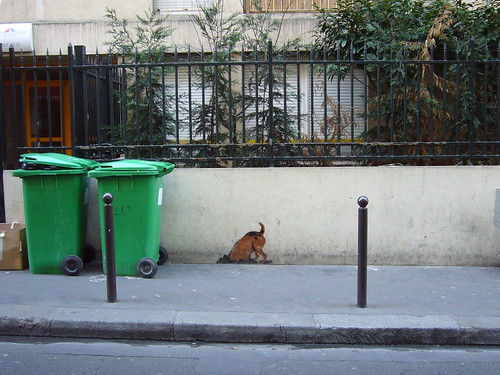
Belleville streetart
To my surprise I discovered that it was easy to change my way of writing and even my way of working more generally. The writing came easiest. When I wrote my master thesis, on very good days I could produce half a page. I could file and mould every sentence for hours, a technique I think contributed to the far too dense structure. Not only is the fluency easily lost, but I also started to find it a boring way to work.
[teaserbreak]
I then read a tip that helped me out of it right away. Now, regularly write at least a 1000 words on a regular workday. It’s just to write on, without any censorship – don’t erase anything, just switch paragraph – and preferably no checking of sources during the first draft. [Write everything you want like to check in square brackets]. One should start first thing in the day (or rather, in the work day, for us with children) and keep it going for two hours. Often it goes so well that it is just to continue. They way I wrote earlier made me so fed up with my own text that I never rewrote and hardly even read through it. – But even then I had to restructure the text, both within and between chapters. Now, this editing work is much easier on all levels. It’s far easier to delete since my sentences and paragraphs haven’t had the time to become particularly dear darlings, and it is far easier to rewrite and restructure.

This writing exercise also helped me with the more challenging task to change work habits. When it suddenly was necessary for me to get as much work done as possible, it almost seemed like I needed to change personality. Until then, for as long as I can remember my way of working can be likened to a heavy, heavy steam engine setting off from last chance saloon. I could (can) spend hours getting started. I’ve waited until the absolute deadline, than procrastinated a little longer before slowly pulling my forces together, in order to finally work for a loooong, looooong time with an increasing speed and enthusiasm. Then of course, after a period of intense effort and concentration, some kind of break is desperately needed, and it will once again take a long time – and usually a last call – to get the steam engine going again.

Then circumstances just came and changed the pattern. Circumstances demand that I get a minimum of 6-7 hours of sleep every night (if not things can get very nasty between Mrs Surpæt [untranslatable old dialect related to ‘grumpy’] and her offspring. Circumstances also demand that (at least the first part of) the office day must end around 15H. That leaves me with no more than 5-6 successive work hours, something which was unthinkable under my previous regime. I sometimes force myself to take a lunch break, and I still rarely write less than my 1000 pages. – If it is not one of these awful, annoying, aggravating days that keep me from getting on with the writing right from the beginning. Because, the thing is, if I get hung up in some petty task of searching for something or clearing some space on my desk or some administration of some kind, I’m almost certainly unable to recover that day’s work spirit.

But if I’ve prepared rightly and know where to start (either by thinking it through the day before or on the way to work), and I sit down without too much fuss, it’s almost as if the fewer work hours I have in front of me, the more I get done. Down to a certain limit of course, but working concentrated for around 5-6 hours (with or without a break, is really perfect). This scheme worked amazingly well for more than four months in the autumn, a very lengthy leg which it would have been impossible to beat under earlier circumstances.

Now the question is: My thesis needs about 33 000 more words. Can I get them written in 33 days (divided on 4 days a week, – also due to certain circumstances), thus a little less than two months?

Belleville streetart

To my surprise I discovered that it was easy to change my way of writing and even my way of working more generally. The writing came easiest. When I wrote my master thesis, on very good days I could produce…

Read more

Create expectations for the reader

Canal St. Martin, summer in Paris

I wrote about my expectations of Hemingway’s little book from his early years in Paris, A moveable feast, a while ago. Silly me thought I would find the reason why it was particularly hard to write about Paris in his book, as he wrote so evocatively: [teaserbreak]

Maybe away from Paris I could write about Paris as in Paris I could write about Michigan. I did not know it was too early for that because I did not know Paris well enough. But that was how it worked out eventually (A moveable feast, 2007, p. 4).

It took me quite a while – silly me – after finishing the book to understand what kind of answer he had given, because the answer wasn’t straight, as I had hoped it to be. It was in Paris that he decided to quit reportage and journalism, at which he seemed quite successful, and test his luck in literature – despite having a wife and child to support. And it was in Paris he acquired his characteristic style of writing and building up a story:

Then I started to think in Lipp’s [he’s writing in the old cafés in the old artist and intellectual quarters at the west bank :-)] about when I had first been able to write a story after losing everything. … It was a very simple story called ‘Out of Season! And I had omitted the real end of it which was that the old man hanged himself. This was omitted on my new theory that you could omit anything if you knew that you omitted and the omitted part would strengthen the story and make people feel something more than they understood (A moveable feast, 2007, 43).

Of course he wouldn’t answer my question, I realised. Merde. Now I have to figure it out myself, and that would probably take me a whole lifetime. Because, after all:

If you are lucky enough to have lived in Paris as a young man, then wherever you go for the rest of your life, it stays with you, for Paris is a moveable feast (Hemingway, in a letter to a friend

On the more positive side, I got an excellent lesson in the important skill of creating expectations for the reader. Before Christmas, the feedback I got on one of the core chapters in my thesis surprised me to the extent of first annoy and discourage me, then – and I hope I’m there now – spurring me on to produce better texts. I had described in detail a slam session where I highlighted a handful of texts and people in order to go more in depth. But what had grasped people’s attention was not at all what I had found interesting when being present that night, neither what I had wanted to convey to the readers. If I had managed to create any expectations at all through my chapter, it had certainly been the wrong ones…

After some days of gloomy afterthought, I came to the conclusion that the whole core of the thesis needed to be restructured. I don’t think it’s very much work, but it will alter the way people read my argument (if there is any?!) fundamentally. And readers’ expectations and their gradual fulfilment (which in the case of literature can be days, weeks or even years after you finished the book) are everything.

Canal St. Martin, summer in Paris

I wrote about my expectations of Hemingway’s little book from his early years in Paris, A moveable feast, a while ago. Silly me thought I would find the reason why it was particularly hard to write about Paris in his…

Read more

How racist is American anthropology?

Why does anthropology tend to focus on “exotic others”? Why this obsession with Africa? How come calls by well-known anthropologists such as Paul Rabinow to “anthropologize the West seemed to have not brought forth much fruit? How racist is American anthropology?

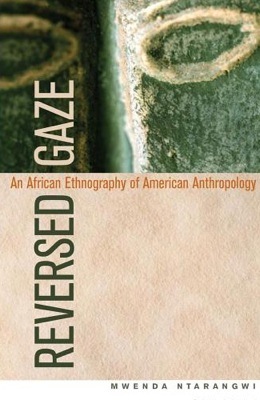
Kenyan anthropologist Mwenda Ntarangwi discusses those and other questions in his new book Reversed Gaze. An African Ethnography of American Anthropology.

Yes, Ntarangwi has conducted an anthropological study of American anthropology! An important undertaking. He has studied textbooks, ethnographies, coursework, professional meetings, and feedback from colleagues and mentors. He “reverses the gaze”, he stresses: Whereas Western anthropologists often study non-Western cultures, he studies “the Western culture of anthropology”.

He is especially interested in “the cultural and racial biases that shape anthropological study in general”.

In the preface and introduction he writes:

If anthropology truly begins at home as Malinowski states, how come, as I had thus far observed, anthropology tended to focus on the “exotic”? How come only a small percentage of fieldwork and scholarship by Western anthropologists focused on their own cultures, and when they did it was among individuals and communities on the peripheries, their own “exotics” such as those in extreme poverty, in gangs, ad others outside mainstream culture? (…)

This book is a personal journey into the heart of anthropology; representing my own pathways as an African student entering American higher education in the early 1990s that I knew very little about. It is a story about my initial entry into an American academic space very different from my own experience in Kenya, where we followed a British system of education.

It is also a story hemmed within a specific discourse and views about anthropology that can be best represented by remarks from fellow graduate students who wondered what i was doing in a “racist” discipline. (…) Troubled by this label, I consciously embarked on a journey to find more about the discipline.

He critiques dominant tenets of reflexivity, where issues of representation in his opinion are reduced to anthropologists’ writing style, methodological assumptions, and fieldwork locations. Inherent power differences that make it easier for anthropologists to study other people (“studying down”) than to study themselves (“studying up”) are rendered invisible.

Ntarangwi seeks to contribute to the process of “liberating the discipline from the constraints of its colonial legacy and post- or neocolonial predicament”. As long as the bulk of anthropological scholarship comes from Europe and North America and focuses on studying other cultures than their own, the power differentials attendant in anthropology today will endure.

I have just starting to read and took among others a short look at the chapter about the annual meetings of the American Anthropological Association (AAA).

“I believe it is at the AAA meetings that the anthropological ritual of what we do as anthropologists is best performed”, he writes:

Just as America has become an economic and political empire, American anthropology has consolidated a lot of power and in the process has peripheralized other anthropologies, forcing them either to respond to its whims and hegemony or to lose their international presence and appeal. The American Anthropological Association (AAA), I argue, is an important cultural phenomenon that begs for an ethnographic analysis.

It was in 2002, four years after his graduation that Mwenda Ntarangwi attended his first AAA-meeting. It was held in New Orleans. Already at the airport, he realises it is easy to spot anthropologists:

They were dressed casually, many were reading papers, and majority wore some exotic piece of jewelry or clothing that symbolized their field site – either a bracelet from Mexico (…), a necklace from a community in Africa, a tie-dyed shirt, or a multicolored scarf.

His observations from the different sessions he attended remind me of my own impressions: “Conference papers were written to make the presenters sound more profound rather than to communicate ideas”, he writes.

But there were interesting panels as well, among others about “marginalization and exclusion of certain scholars and scholarship on the basis of their race”. There were, he writes, “discussions of how Haitian anthropologists challenged the notion of race but were never “knighted”, as was Franz Boas, simply because they were Black”.

He also attended sessions where the speakers were using data collected ten or twenty years before and yet were speaking of the locals as if representing contemporary practices.

Ntarangwi went to the 2007 annual meeting as well. He was very much interested in seeing how well the meeting itself reflected in its theme “Inclusion, Collaboration, and Engagement.”

I’ll write about it next time. I’ll take the book with me on my short trip to Portugal. I’m leaving tomorrow.

You can read thw first pages of the books on Google Books. Check also Mwenda Ntarangwi’s website.

SEE ALSO:

How can we create a more plural anthropological community?

The Five Major Challenges for Anthropology

The resurgence of African anthropology

“Take care of the different national traditions of anthropology”

“No wonder that anthropology is banished from universities in the ‘decolonized’ world” (updated)

Keith Hart and Thomas Hylland Eriksen: This is 21st century anthropology

Why does anthropology tend to focus on "exotic others"? Why this obsession with Africa? How come calls by well-known anthropologists such as Paul Rabinow to "anthropologize the West seemed to have not brought forth much fruit? How racist is American…

Read more