search expand

Ethnographic research: Why care about plagiarism?

AN-cover

Educators complain about plagiarism. But it is not principally because material is too readily available that students copy and paste material from the internet to their papers. It’s because new forms of authorships are emerging online, anthropologist Susan D. Blum writes in Anthropology News March 2008.

Blum has done ethnographic research on plagiarism and college culture for three years at “Saint Pastoral’s” University.

Social websites like Wikipedia challenge the romantic notion of the author as the individual genius:

While the romantic notion of the author emphasized creation in a vacuum, without influence, touched only by inspiration from the individual’s genius, the new collectivized idea of the author celebrates the kind of creativity that comes from selecting, from accumulating a pastiche, a patchwork, a sample of others’ work. The line between creation and what “copyright fundamentalists” regard as theft is now completely— and consciously—fluid.

(…)

Collectively, one after another, contributors add to or edit Wikipedia articles, without directly requesting credit or payment. The living product is quite essentially collaborative, an accretion of many people’s words belonging to everyone and Common Sense and anthropological Sense no one simultaneously.

(…)

Sharing music, video, text and images is routine and simple on the “digital commons” with YouTube, Flickr and other file-sharing interfaces. Items often follow a circuitous path before they end up on some- one’s iPod or hard drive.

Maybe educators should care lass about plagiarism? Blum concludes:

Faculty can attempt to enforce traditional academic citation norms, but we are well advised to recognize that a large portion of the students we encounter do not share traditional academic values of originality, singularity and individualism in intellectual creation. In the area of authorship, educators’ common sense is not necessarily students’ common sense.

In some ways our students have become folk anthropologists, speaking out about the impossibility of singularity, the shared quality of discourse, the reality of fragments of texts incorporated into every utterance (or written document) and the collective nature of cultural creation. Now that’s a story!

>> read the whole article “The Internet, the Self, Authorship and Plagiarism” (pdf)

This is one of five articles on “Online Engagement” in Anthropology News March 2008.

SEE ALSO:

Interview with Michael Wesch: How collaborative technologies change scholarship

New media and anthropology – AAA meeting part III

Plans to study anthropological online communities and Open Access movement

AN-cover

Educators complain about plagiarism. But it is not principally because material is too readily available that students copy and paste material from the internet to their papers. It's because new forms of authorships are emerging online, anthropologist Susan D. Blum…

Read more

The most compelling ethnographies

We’ve been into this topic a few times before, but this might be the longest list of good ethnographies. CultureMatters-blogger Lisa Wynn not only lists her own favorite books but also several ethnographies that are particularily popular with students.

She writes that she only can think of a small handful of ethnographies that have affected her in the way that a good novel can. This is her list:

– Evans-Pritchard: Witchcraft, Oracles, and Magic;
– Lila Abu-Lughod: Writing Women’s Worlds;
– Elizabeth Warnock Fernea: Guests of the Sheikh (not precisely an ethnography, more a memoir);
– Paul Willis: Learning to Labor;
– Philippe Bourgois: In Search of Respect;
– Amitav Ghosh: In an Antique Land;
– Joao Biehl: Vita;
– Levi-Strauss: Tristes Tropiques;
– Pierre Clastres: Chronicle of the Guayaki Indians.

She also reflects on some of her favorite examples of ethnographic fiction.

>> read the whole post on Culture Matters

UPDATE: For more suggestions and comments see the post on the blog Entertaining Research: Amitav Ghosh among most compelling ethnographies

SEE ALSO:

The Secret of Good Ethnographies – Engaging Anthropology Part III

Alex Golubs list on popular ethnographies

Good anthropological writing: “Nuclear Borderlands” and “Global Body Shopping”

Why is anthropological writing so boring? New issue of Anthropology Matters

We've been into this topic a few times before, but this might be the longest list of good ethnographies. CultureMatters-blogger Lisa Wynn not only lists her own favorite books but also several ethnographies that are particularily popular with students.

She…

Read more

“Focalizar o que é comum aos seres humanos” / Open Access Anthropology in Brasil

cover

What do all humans have in common? My interview with anthropologist Christoph Antweiler in German about his book on cultural universalisms has been translated into Portuguese and will be published in the journal Revista ANTHROPOLÓGICAS. You can download the Portuguese translation here.

The text was translated by Peter Schröder, one of the editors of Revista ANTHROPOLÓGICAS. The journal is open access.

Open Access, he tells me, is supported by the Brazilian government. The best scientific journals are freely available on the Portal Scielo http://www.scielo.br Via the subject list, I found three more anthropology journals: Horizontes Antropológicos, Mana and Revista de Antropologia. Most of the articles are in Portuguese, only a few of them in English.

SEE ALSO:

Museum Anthropology Review goes open access

Already lots of publications in the open access anthropology repository Mana’o

Book and papers online: Working towards a global community of anthropologists

cover

What do all humans have in common? My interview with anthropologist Christoph Antweiler in German about his book on cultural universalisms has been translated into Portuguese and will be published in the journal Revista ANTHROPOLÓGICAS. You can download the Portuguese…

Read more

Museum Anthropology Review goes open access

screenshot

This morning, the journal Museum Anthropology Review was launched as an open access journal. The content that was published during 2007 (the journal’s first year) is now available in both HTML and PDF format – free for all readers all over the world.

Editor Jason Baird Jackson said that making scholarly work more easily and affordably accessible is especially important in fields like folklore and anthropology that are rooted in the study of local cultures worldwide:

“If, for instance, a scholar spends months documenting the work of an elderly woodcarver living in a small American town and then writes about what she learned in a peer-reviewed research article, I have an obligation as her editor to make it as easy as possible for the schoolchildren of that town — or the artist’s grandchildren — to gain access to her writing. Open access repositories and journals, in their varied forms, help make this possible.”

>> read the press release

>> more information on the Museum Anthropology Blog

>> website of the Museum Anthropology Review

UPDATE: Inside Higher Ed reports:

There are hundreds of scholarly journals published online, plenty of them free. But what makes Museum Anthropology Review’s launch notable is that it is being led by the same editor as the traditional journal, Museum Anthropology, using the exact same peer review system.

For years, the criticism of the free, online model has been that it would be impossible for it to replicate the quality control offered by traditional publishing. When online journal publishers have boasted of their quality control, print loyalists have said, in effect, “well maybe it’s good, but it can’t be as good as what we’re doing.”

To this subjective criticism, open access advocates can now point to someone who knows exactly what the standards are at both journals, as he’s leading them both.

>> read the whole article in Inside Higher Education

SEE ALSO:

Danah Boyd on Open Access: “Boycott locked-down journals”

Anthropology News February about Open Access Anthropology

2006 – The Year of Open Access Anthropology?

Why should anthropologists care about open access?

Open Access News

screenshot

This morning, the journal Museum Anthropology Review was launched as an open access journal. The content that was published during 2007 (the journal's first year) is now available in both HTML and PDF format - free for all readers all…

Read more

Sheds light on the collaboration between science and colonial administration in Naga ethnography

book cover

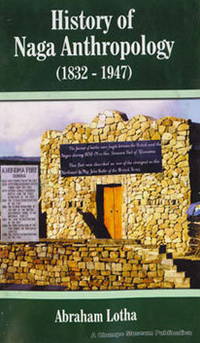
Paul Pimomo reviews in The Morung Express a book that might not only be interesting for area specialists. The History of Naga Anthropology is, he writes, “a valuable contribution to the broad area of postcolonial studies“.

In History of Naga Anthropology (1832-1947), Abraham Lotha sheds light into a darker part of the history of our discipline. Among other things, he documents the “intimate collaboration between science and colonial administration in the development of Naga ethnography”. The book is based on research for the master’s degree in Cultural Anthropology at Columbia University in New York:

Like other postcolonial studies of history, Abraham Lotha’s book places the first hundred years of writings about Nagas in the category of “colonial anthropology,” that is to say, ethnography by colonial administrators and others enabled by them in ways that directly or indirectly served the colonial functions of the powers that be.
(…)
British writing on Nagas up to 1866 portrayed them as ignorant, stubborn, and hostile to British interests. Several monographs came out of the military expeditions into Naga territory at this time, and shorter individual soldiers’ accounts of their experiences were published in the Journal of Asiatic Society of Bengal. These early articles, mostly in the manner of descriptive reports, sold the Nagas as exotic, wild, and savage tribes to their scholarly readers in India and in England.

The projects of the colonial administration and Christian missionaries resulted in that the Nagas were socialized into the ideology of colonial subordination and, after they left the Naga Hills, into the position of second-class citizens in postcolonial India, he writes.

>> read the whole review in The Morung Express

SEE ALSO:

Book review: An Anthropological history of the Adivasis of Bastar

An exhibition and a movie: The French, colonialism and the construction of “the other”

On Savage Minds: Debate on the Construction of Indigenous Culture by Anthropologists

Anthropology and Colonial Violence in West Papua

Rethinking Nordic Colonialism – Website Sheds Light Over Forgotten Past

“No wonder that anthropology is banished from universities in the ‘decolonized’ world”

book cover

Paul Pimomo reviews in The Morung Express a book that might not only be interesting for area specialists. The History of Naga Anthropology is, he writes, "a valuable contribution to the broad area of postcolonial studies".

In History of Naga…

Read more