search expand

How gaming wealth is reviving American Indian traditions

cover

Gaming is big business for many Native American tribes. For the Seminole tribe in Florida, gaming wealth enabled them to revive traditions and celebrate their culture in previously unimaginable ways, anthropologist Jessica R. Cattelino writes in her new book High Stakes: Florida Seminole Gaming and Sovereignty.

Cattelino conducted fieldwork on the Seminoles” six reservations, attending everything from tribal council meetings to birthday parties, and learning about the texture of everyday life according to a press release.

The Seminoles are often credited with opening the door to Indian gaming in 1979. In 2006, they stunned the world in 2006 with its $965 million purchase of Hard Rock International, an empire of restaurants, performance venues, hotels and casinos in 45 countries.

Cattelino found that the Seminoles’ estimated $1 billion in annual gaming proceeds has opened the door to a wealth of opportunities.

On the one hand, more and more expensive new vehicles fill tribal parking lots and driveways. On the other hand gaming proceeds have allowed the tribe to erect an social safety net that includes universal health care, financial support for unlimited education, full senior care and generous reservation amenities, from gyms to community centers.

Furthermore, prosperity has allowed the Seminoles to revive traditions and celebrate their culture in previously unimaginable ways:

A new market for high-end Seminole crafts has emerged, fueled by the collecting potential of the Seminoles themselves. Local schools now incorporate traditional practices and native-language instruction into their curricula. New positions as cultural educators, tribal museum officials or language instructors have opened up.

Gaming has also enabled Seminoles to return to traditional tribal forms of housing and community organization:

Since the mid-1960s, the U.S. Bureau of Indian Affairs (BIA), in collaboration with the U.S. Department of Housing and Urban Development, had pushed tribal members into individual, cement-block homes arranged without regard to extended family ties. But the new wealth has allowed them to take control of tribal housing, ushering in a return of native construction styles, traditional structural elements and housing arrangements that cluster residents according to Seminole matrilineal clans, Cattelino found.

And the Seminoles use their wealth to help other communities. They have contributed to Hurricane Katrina relief, the National Museum of the American Indian in Washington, D.C., and numerous local causes.

A real sunshine story, too god to be true? Not even gaming scandals? There have been just “a few isolated issues”, we read. “Everybody expected tribal gaming to be a wide open field for organized crime,” Cattelino writes, “but the evidence just isn’t there.”

>> read the press release (UCLA Newsroom)

SEE ALSO:

Fieldwork reveals how slot machines are exploiting people

Native American Tribe Allows Gay Marriage

Dissertation: Indigenous people not always “victims of economic globalisation

How Media and Digital Technology Empower Indigenous Survival

cover

Gaming is big business for many Native American tribes. For the Seminole tribe in Florida, gaming wealth enabled them to revive traditions and celebrate their culture in previously unimaginable ways, anthropologist Jessica R. Cattelino writes in her new book High…
Read more

Nigel Barley: "Fiction gives better answers than anthropology"

(LINKS UPDATED 18.2.2021) “Fiction’s more fun. It lets you look inside people’s heads in a way you wouldn’t dare to do if you stuck to anthropology”, anthropologist Nigel Barley says in an interview with the Telegraph:

“As an anthropologist you’re always asking questions such as: How different can different peoples be? Are we all reducible to a common humanity? And if so: what is it? Nobody can answer these questions. But I like to use fiction to try to answer anthropological questions. And fiction, I find, gives better answers.”

His book The Duke of Puddledock records Nigel’s travels, literal and figurative. It is part biography, part autobiography, part natural history, part anthropology, and part travelogue.

>> read the whole story in the Telegraph

Nigel Barley, most known for his funny book The Innocent Anthropologist: Notes from a Mud Hut is not the only anthropologist who explores the possibilities of fiction.

A few weeks ago, I read about Tahmima Anam, the first Bangladeshi writer to win the Overall First Book Award at The Commonwealth Writers Prize 2008. She has a PhD in Social Anthropology from Harvard University, and an MA in Creative Writing from Royal Holloway College.

“I wrote A Golden Age because I wanted the story of the Bangladesh war to reach an international audience”, she says. She travelled throughout Bangladesh, interviewing ex-freedom fighters, military officers, students, and survivors of the 1971 war. The novel is a fictionalised account of these war stories, combined with her own family history.

In an interview with the Boston Globe she explains why she wrote a novel, rather than a nonfiction book:

I felt that this was a human story that needed character and plot. I wanted it to touch people’s hearts, as the stories I had heard had touched my heart. I wanted people to have a visceral sense of what it was like to be there at that time, and I didn’t think that nonfiction, for all its beauties and virtues, could do that.

And in an interview with the Guardian she says:

After graduating from university I started a PhD in social anthropology, but really I was dreaming of writing a novel. I would sit in my lectures and scribble in the margins of my notebooks. But for a long time, I didn’t tell anyone I wanted to be a writer; it was my undercover identity. It was when I started doing the research that it became more real. I travelled back to Bangladesh and met survivors of the Bangladesh war. After hearing their stories, I felt that I really ought to take the project more seriously, and that’s when I began writing the novel in earnest.

See also her articles in the Guardian and in New Statesman

SEE ALSO:

Manga instead of scientific paper: How art enriches anthropology

The most compelling ethnographies and ethnographic fiction

The Secret of Good Ethnographies – Engaging Anthropology Part III

Why is anthropological writing so boring? New issue of Anthropology Matters

(LINKS UPDATED 18.2.2021) "Fiction's more fun. It lets you look inside people's heads in a way you wouldn't dare to do if you stuck to anthropology", anthropologist Nigel Barley says in an interview with the Telegraph:

"As an anthropologist you're always…

Read more

Jack Goody: "The West has never been superior"

(LINKS UPDATED 8.9.2020)

cover

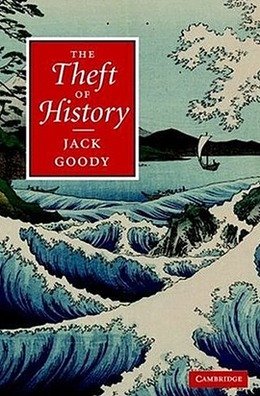
Are democracy, capitalism, freedom and the concept of romantic love unique inventions of the West? No. In his new book, anthropologist Jack Goody shows that the superiority of the West is largely unreal, even if we look to the recent past.

In “The Theft of History”, Goody criticizes both Western historical writing and his own discipline anthropology, professor Alfredo Ascanio writes in a review at OhMyNews:

For example, it was always believed that democracy was born in Athens and in fact there appeared a particular form of democracy, but democracy existed first in Carthage, even in some cities in the Mediterranean, India, China and other “tribal” societies.

Karl Max and Max Weber were wrong in their thesis about capitalism, because capitalism — despite the industrial revolution — was far more widespread. It was first a product of sowing cotton and the exploitation of silk in India and China.

In another example, Goody explains how Elias and Braudel have overemphasized the European contribution in relation to modernity, when in fact this happened first in India and China. The concept of capitalism is rather a concept of the 19-century, says Goody, which should be used more carefully and has only been used for overvaluation of the differences between Europe and Asia.

And in Asia, the reality was always more advanced than the West in art and science, even in what was considered romantic love. It was not a Western invention but is a universal sentiment that already existed.

>> read the whole review at OhMyNews

In the introduction, Goody explains the title of the book:

The ‘theft of history’ of the title refers to the take-over of history by the west. That is, the past is conceptualized and presented according to what happened on the provincial scale of Europe, often western Europe, and then imposed upon the rest of the world.

The books is inspired by his research in Africa:

After several years’ residence among African ‘tribes’ as well as in a simple kingdom in Ghana, I came to question a number of the claims Europeans make to have ‘invented’ forms of government (such as democracy), forms of kinship (such as the nuclear family), forms of exchange (such as the market), forms of justice, when embryonically at least these were widely present elsewhere.

These claims are embodied in history, both as an academic discipline and in folk discourse. Obviously there have been many great European achievements in recent times, and these have to be accounted for. But they often owed much to other urban cultures such as China.

(…)

The closer I looked at the other facets of the culture of Eurasia, and the more experience I gained of parts of India, China, and Japan, the more I felt that the sociology and history of the great states or ‘civilizations’ of Eurasia needed to be understood as variations one of another.

>> read the whole introduction (Cambridge University Press)

The book has also been reviewed by The Canadian Review of Sociology and Keith Hart.

SEE ALSO:

David Graeber: There never was a West! Democracy as Interstitial Cosmopolitanism

Amartya Sen: Democracy Isn’t ‘Western’ this text was also debated on Savage Minds

For an Anthropology of Cosmopolitanism

Ethnocentric anthropology and Working towards a global community of anthropologists

Anthropologists condemn the use of terms of “stone age” and “primitive”

cover

(LINKS UPDATED 8.9.2020) Are democracy, capitalism, freedom and the concept of romantic love unique inventions of the West? No. In his new book, anthropologist Jack Goody shows that the superiority of the West is largely unreal, even if…

Read more

Ethnographic study of anti-corporate globalization movements

cover

“I had never seen anything like it. I knew immediately that I wanted to study this phenomenon”, says

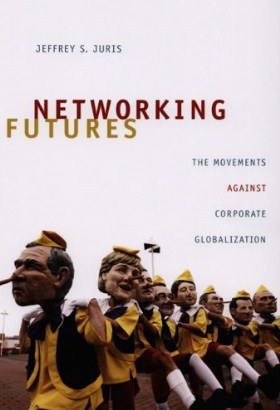
 anthropologist Jeffrey S. Juris. In 1999 he participated in the protests against the World Trade Organization meeting in Seattle. Now he has published an ethnography of the transnational anti-corporate globalization movements called Networking Futures: The Movements Against Corporate Globalization.

The book chronicles his experiences organizing and participating in protests from Seattle to Prague to Barcelona. From his base in Barcelona, he followed their connections and movements around the world. He explains how activists are not only responding to growing poverty, inequality, and environmental devastation but also building social laboratories for the production of alternative values, discourses, and practices.

>> more information on the Arizone State University website

>> website of the book

I’ve been fascinated by this topic as well. When I was considering starting with a doctorate a few years ago, I wanted to do multisited field work at the World Social Forums where activists from all over the world meet. In 2004, I wrote an article for the Norwegian Attac magazine Utveier about the World Social Forum in Mumbai, India:

Hindus and Muslims eat breakfast together; Christian nuns join Tibetan monks in a chant. At the World Social Forum in India, getting to know the person sitting next to you was at least as important as hearing the speeches by the stars in the movement for a just globalisation.
(…)
The Indian newspapers were thrilled at the amount of people from all countries of the world who came seeking knowledge. “There’s something intoxicating about ordinary people from all parts of the world gathering at one place,” The Times of India writes, telling enthusiastically about an Australian woman trying to understand the struggle of the Telugu farmers, and about a burly Austrian asking a petite Tibetan girl about her leaflet against the Chinese occupation.

>> read the whole article

SEE ALSO:

Chronicles Women’s Social Movements in India

John Postill on media anthropology and internet activism in Malaysia

David Graeber: There never was a West! Democracy as Interstitial Cosmopolitanism

New journal: “Radical Anthropology” with David Graeber

Get Out of the Library and Into the Streets – new book by David Graeber

“Anthropology needs to engage in an activist way”

cover

"I had never seen anything like it. I knew immediately that I wanted to study this phenomenon", says

 anthropologist Jeffrey S. Juris. In 1999 he participated in the protests against the World Trade Organization meeting in Seattle. Now he has…

Read more

“A well-informed critique of wartime anthropology for the military”

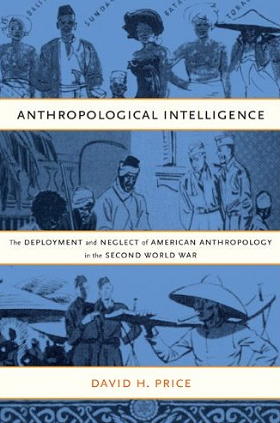
cover Approximately half of all anthropologists in the United States contributed their expertise to the World War II effort. In his new book Anthropological Intelligence: The Deployment and Neglect of American Anthropology in the Second World War, anthropologist David Price explores the wide range of roles they played through dozens of accounts profiling their work.

In a review in Anthropological Quarterly that today was published in Red Orbit, Roberto J Gonzalez writes:

Price’s work reveals that even in a “good war” like WWII, anthropologists often stood on ethically shaky ground when working for military and intelligence agencies, and some of them came to regret the long- term consequences of their participation.

In addition, the book reveals that the during the war, military officials had a tendency of “selectively ignoring and selectively commandeering social scientists’ recommendations” (p. 198). All too often, anthropologists had little impact on policy making and functioned as cogs in large bureaucracies with clearly established goals.

Anthropologists were involved in many doubtful projects. But only “few anthropologists had second thoughts about the ethics of applying anthropology to warfare” according to Price’s book.

The Office of War Information employed nearly a dozen anthropologists, who among other things designed propaganda custom made for Japanese audiences for the purpose of convincing them to surrender.

(…)

Still others were recruited into the Office of Strategic Services (established in 1942), a spy agency that was the precursor to the CIA. For example, Gregory Bateson carried out clandestine missions in South Asia; Carleton Coon used his anthropological knowledge to train assassins and kidnappers in North Africa

(…)

Among the most shocking sections is a description of “social engineers” such as Henry Field (p. 127). Field and several other anthropologists were deeply involved in the “M Project” initiated by President Roosevelt in 1942. The goal was to search the globe for regions where millions of wartime refugees could be resettled.

Declassified documents reveal that “library bound bureaucrats [were] designing contingency plans to move tens of millions of people thousands of miles away from their native lands. Field and his staff appear[ed] comfortable planning to move inventoried people about the globe like fungible commodities” (p. 126).

Even more disconcerting is that fact that “in almost every case, the peoples identified for relocation were victims of the aggression of others (e.g., the Roma, Jews, etc.), as if the reward of being victimized was being moved so that the aggressor could live in peace” (p. 127).

Price concludes that anthropologists’ efforts might have helped defeat the forces of fascism. But at the same time, they unleashed other forces that could potentially be used for harm.

Gonzales has written a quite enthusiastic review. Price’s book is an “extraordinarily powerful and well-informed critique of wartime anthropology for the military”, he writes.

When I’m not very comfortable with the review, it’s because of the connections between the two anthropologists. Gonzales and Price are among the founding members of the Network of Concerned Anthropologists and have written several texts together, i.e. When Anthropologists Become Counter-Insurgents

>> read the whole review

There is also a short review in The Olympian

David Price seems to be a fan of open access anthropology. He has put online lots of articles, including about World War I & II and Anthropology

SEE ALSO:

Cooperation between the Pentagon and anthropologists a fiasco?

More and more anthropologists are recruited to service military operations

The dangerous militarisation of anthropology

Anthropology and CIA: “We need more awareness of the political nature and uses of our work”

Protests against British research council: “Recruits anthropologists for spying on muslims”

American Anthropologists Stand Up Against Torture and the Occupation of Iraq

cover

Approximately half of all anthropologists in the United States contributed their expertise to the World War II effort. In his new book Anthropological Intelligence: The Deployment and Neglect of American Anthropology in the Second World War, anthropologist David Price explores…

Read more