search expand

Anthropologists on the war on Gaza (updated)

LINKS UPDATED 26.10.2023 (See also part II David Graeber: Boycott Israel! – More anthropologists on Gaza) After two weeks war in Gaza, it’s time to round up: How have anthropologists contributed to a better understanding of the conflict? According to my overview, they have been quite silent. And they have been more active on blogs than in traditional media. Neither Google or Yahoo news search give any relevant results.

Gabriele Marranci has written one of the first blog posts: Gaza: bad politics needs blood. He criticizes both Hamas and the Israeli government:

And here lies the main issue: both parties, the Israeli and Palestinian leaders, share at least something in common: an immoral and unethical view for which political gain are more important than innocent lives, including those of women and children.
(…)
Hamas has no problem to sacrifice Palestinian lives in the name of an impossible mission (to remove Israel from the Middle East), and the Israeli government has no issue with endangering the lives of innocent Israelis with the inevitable retaliation of suicide bombing and killings.
(…)
Palestinians and Muslims have to accept one simple fact: Israel is here to stay. Israel and its supporters have likewise to accept that sophisticated forms of ethnic cleansing will not be sustainable nor sucessful. Palestinians are, generation after generation, there to stay, and if a solution not found, to fight.
(…)
The Israeli-Palestinian conflict, of course, has some clear historical reasons. Yet the fact that it is still one of the most deadly conflicts affecting civilians is due to extremely bad politics, and bad politics, akin to a kind of cancer, requires innocent blood in order to perpetuate itself.

In New American Media, William O. Beeman explains why Hamas is Not Iran’s Puppet:

The conflict between Israel and Hamas is not a proxy war between Israel and Iran. This is a myth that has grown up during the Bush administration, and is now widely promulgated with little or no support. (…) Hamas has been effectively sealed off from the world by Israel, and by Egypt.

tabsir – one of the best resources regarding the Middle East – collects continuisly news stories and analysis on Gaza. Daniel Martin Varisco wrote two posts: Rizpah and the Politics of Vengeance and David vs Goliath, the IDF vs Hamas

John Hutnyk posted two eyewitness reports by Ewa Jasiewicz, a former student from Goldsmiths.

Maximilian Forte has collected lots of links in his post Currently Covering and Commenting on the Gaza Massacre and reflected on using twitter in Tweets of Conflict in the New Online War Zone.

Erkan Saka is also sharing Gaza-analysis with us, see More than 200,000 protested in Çağlayan, Istanbul and For the people of Gaza

That’s it so far. Not much. In Gaza: A Frightening Anthropological Analogy, Pamthropologist criticizes her colleagues:

Is presenting a discussion of these issues not, exactly, what we should be doing as Anthropologists? And yet, our blogs rarely cover these issues–the notable exception being Open Anthropology, wait he is a Canadian. You know, as a discipline, we have no functioning voice in the American dialogue.

But anthropologists have raised their voices about this conflict before. Last year, among others, Adam S. Kucharski published his thesis about The Politics of Water in the Israeli-Palestinian Conflict.. Linda Teigland Helgesen was eight months of fieldwork among Palestinian students at Birzeit University. The result is her thesis The construction of resistance. A case study among “Il-majaneen” students in the occupied West Bank

Earlier this year, Jeff Halper published his new book An Israeli in Palestine. Resisting Dispossession, Redeeming Israel. It was reviewed by Electronic Intifada. See also interview with Halper ‘As Israelis, We Also Fight for Palestinians’ (Oh My News).

For general news see The Guardian and the impressive round-up of blogposts from Gaza by Global Voices: Palestine: “In Gaza our future is almost destroyed”

UPDATE 5: Metronews in Halifax (no longer available) writes about Israelian anthropologist Jeff Halper (mentioned above): “It’s unusual to have an Israeli who’s critical of Israel and supports Palestinian rights, especially with the war in Gaza going on,” he told Metro yesterday. Something needs to be done, he said, because the current situation isn’t just affecting Gaza, it’s “messing up the whole world.”

UPDATE 4: New posts by Gabriele Marranci: Gaza and the ethos of death and Maximilian Forte at Open anthropology Campus Gaza: Academic Boycotts and Complicit Silence

UPDATE 3: Palestinian anthropologist Yara El-Ghadban has collected lots of information on her bilingual (French / English) blog Tropismes

UPDATE 2: New post by Maximilian Forte: Accepting the Might to Exist: Some Israeli Lessons for Anthropology:

Anthropology teaches us not to naturalize any human construction, and to recognize the arbitrariness of culture, not to mention the arbitrariness of power. Political Anthropology invites us to recognize that the state is the most violent of all arbitrary institutions in human history, that all states on earth owe their existence to massive and bloody assaults, and continue to preserve and promote themselves through violence against the peoples governed by other states.

UPDATE 1: Today, here in Norway, Thomas Hylland Eriksen wrote an article in the newspaper Aftenposten where he proposed a possible solution – to put Israel-Palestine under (UN-) administration (in Norwegian only). Yesterday, the Norwegian Psychological Association demanded the end of the war. The psychologists are among other things concerned for possible consequences for children’s mental health (Norwegian only)

SEE ALSO PART TWO OF THIS POST

David Graeber: Boycott Israel! – More anthropologists on Gaza (II)

SEE ALSO EARLIER POSTS:

Lila Abu Lughod: “In Israel and Palestine we have an amazing opportunity”

Anthropologists on the Israel-Lebanon conflict

Selected quotes from “On Suicide Bombing” by Talal Asad

The anthropology of children, war and violence

Conflict Resolution and Anthropology: Why more scholarship on violence than on peace?

For an Anthropology of Cosmopolitanism

LINKS UPDATED 26.10.2023 (See also part II David Graeber: Boycott Israel! - More anthropologists on Gaza) After two weeks war in Gaza, it's time to round up: How have anthropologists contributed to a better understanding of the conflict? According…


Read more

Headhunting as expression of indigenousness

logo

Anthropologists often criticize mainstream media for exoticizing people. But in Borneo you’ll find indigenous people who promote themselves as headhunters and are proud of it.

headhunter-ad

The journal Cultural Analysis has recently received a prize in the Savage Minds awards. It was voted as the second best Open Access anthropology journal. In the recent issue, folklorist Flory Ann Mansor Gingging writes about headhunting as an expression of indigenousness.

Headhunting is no longer practiced but the tradition has been commercialised by the tourist industry many places in South East Asia. But the headhunting past has not only taken on a commercial value, but also a cultural and political one, Flory Ann Mansor Gingging argues:

I propose that the tongue-in-cheek invocation of headhunting by the tourism industry represents one way in which Sabah‘s indigenous people counter the outside world’s designation of them as the Other; that is, by parodying their headhunting past, they demonstrate their understanding of the joke and thus guard their indigenousness and their status as human beings.
(…)
Marginalized groups in Sabah, many of whom share a headhunting past, have re- written the headhunting narrative in their favor, becoming co-authors of a cause that seeks, in Hoskins’ words, “to seize an emblem of power, to terrify one’s opponents, and to transfer life from one group to another” (Hoskins 1996a, 38). Thus re-imagined, the headhunting narrative emerges as a tool useful in working towards change and equality.
(…)
Observed in cadence with past and present political milieus, the “refashioning” of the headhunting narrative within tourism in Sabah hence seems to reflect a general consensus among certain of Sabah’s native groups: that Otherness, strategically invoked and appropriated, provides them with an instrument for addressing external threats to their identities.

The anthropologist folklorist and doctoral student in the Department of Folklore and Ethnomusicology at Indiana University grew up in the village she writes about. One of her friends, herself an indigenous Sabahan, said the headhunting imagery and narrative in tourism promotion is “embarrassing but cool”:

“It’s beyond comprehension that I have ancestors that might have been headhunters. At the same time freakish ancestors totally distinguish you from the rest of the global population, so it’s secretly thrilling as well. I love seeing the slightly raised eyebrows reaction I get when I tell someone new I’m from Borneo.”

The researcher heard lots of stories about headhunters during her childhood. As she grew older, her relations to these stories changed:

As I got older, I began to be aware of the economic and political struggles that indigenous people in my state face. Since becoming part of Malaysia in 1963, Sabah, a former British colony, had never had a chief minister who was both indigenous and non-Muslim. Consequently, when in 1984, Joseph Pairin Kitingan, a Dusun lawyer, became the first non-Muslim native to assume this position, being indigenous suddenly meant something to me.

It was also around the same time that I remember feeling a new attraction to the macabre and exotic elements of my culture—one of them being headhunting. Without quite knowing it, I was invoking those aspects of my culture that were potentially embarrassing as a way of responding to the threat I felt towards my own Dusun-ness. For me, headhunting ceased being just a part of history and became, in the most personal way, a part of my heritage—an expression of my indigenousness.

In my opinion, making headhunting such a visible icon of tourism in Sabah is an example of what Michael Herzfeld calls “cultural intimacy,” which he describes as “the recognition of those aspects of a cultural identity that are considered as a source of external embarrassment but that nevertheless provide insiders with the assurance of common sociality” (Herzfeld 1997, 3).

A good example for this trend is the Monsopiad Cultural Village. Here, she writes, Herzfeld’s “cultural intimacy is performed”. Although it is by no means the first to use the state’s headhunting histories within the context of tourism, she believes the Village is the only tourist site that has developed an entire park around the headhunting theme.

On the village’s website they write:

Monsopiad Cultural Village, the traditional village is a historical site in the heartland of the Kadazandusun people and it is the only cultural village in Sabah built to commemorates the life and time of the legendary Kadazan and head-hunter warrior: Monsopiad. The direct descendants of Monsopiad, his 6th and 7th generations have built the village on the very land where Monsopiad lived and roamed some three centuries ago to remember their forefather, and to give you an extraordinary insight into their ancient and rich culture.

Read the whole article:

>> Flory Ann Mansor Gingging: “I Lost My Head in Borneo”: Tourism and the Refashioning of the Headhunting Narrative in Sabah, Malaysia

SEE ALSO:

Ainu in Japan: Cool to be indigenous

In Norwegian TV: Indian tribe paid to go naked to appear more primitive

“They still eat their fellow tribesmen”

Anthropology and tourism: Conference papers are online

logo

Anthropologists often criticize mainstream media for exoticizing people. But in Borneo you'll find indigenous people who promote themselves as headhunters and are proud of it.

The journal Cultural Analysis has recently received a prize in the Savage Minds awards. It…

Read more

In Norwegian TV: Indian tribe paid to go naked to appear more primitive

(Norwegian version) In the reality program «Den store reisen» (Ticket to the tribes), a Norwegian family moved in with Waorani-indians in Banemo, Ecuador. The TV-pictures show people who go naked and live “primitively”. What the TVstation NRK fails to mention, is that they pay the Indians to take off their western clothes during filming, the magazine Ny Tid (New Times) reports.

NRK wanted to present the Indians as more different from Norwegians as they in reality are.

Many anthropologists criticized the program. One of them is Laura Rival from the Centre for International Development at Oxford University. She has studied the Waorani tribe since 1989 and was in the village of Banemo when the Belgian version of the series was recorded:

The Waorani take their clothes off just for these programmes. I know them. They never walk around naked in groups any longer, it’s only for tourists and reality shows.

There were too many modern elements that disturbed things in the village where they really live.

These programmes are built on the same ideas that the west has had for 400-500 years: find the last people in the wild and live with them. The TV companies are only interested in recreating western myths. This is very patronising and gives a false idea of their differences.”

NRK has not problem admitting that parts of the series have been staged: “We are not pretending this is a “fly on the wall” documentary. Reality programs are always a mixture of fiction and reality.

But on the NRK website, the fiction is presented as reality. “The Waorani go around naked. The men’s penises are tied to their bodies with string,” says NRK’s website.

The Waorani have taken part in a large number of reality programmes. The BBC’s Tribal Wives and several countries’ versions of Ticket to the Tribes were filmed in the area.

Read the whole story in these two articles which I have based my summary on:

NORWAY: “Naked bluff” on Primetime TV (Galdu – Resource Centre for the Rights of Indigenous Peoples 19.9.08)

Indian bluff on NRK: Natives turned out not to be so primitive after all (Stavanger Aftenblad, 19.9.08)

LINKS UPDATED 9.7.2019

We’ve had many similar stories before:

“Tribal wives” – Pseudo-anthropology by BBC?

Primitive Racism: Reuters about “the world’s most primitive tribes”

“Good story about cannibals. Pity it’s not even close to the truth”

The Dictionary of Man: Will Bob Geldof and the BBC reproduce racist anthropology?

On Savage Minds: Debate on the Construction of Indigenous Culture by Anthropologists

(Norwegian version) In the reality program «Den store reisen» (Ticket to the tribes), a Norwegian family moved in with Waorani-indians in Banemo, Ecuador. The TV-pictures show people who go naked and live "primitively". What the TVstation NRK fails to mention,…

Read more

How the Human Terrain System people think

“They’re natural born killers. They’re good, they’re lethal, they’re fantastic. I love working with them”, says Major Robert Holbert. He was part of the first Human Terrain Team in Afghanistan in 2007 and tells his story in a fascinating interview with Lisa Wynn at Culture Matters.

The interview gives insight in the way HTS-people (“cultural advisors” for the US-army) think. And it uncovers that their way of thinking only works within their own cosmology – only as long as you accept that it is okay to colonize / occupy Afghanistan or Iraq:

Lisa Wynn: OK, well let me ask a hard question, the kind of question I can imagine opponents of HTS posing. Yes, you’re saying this saves lives, and probably that’s true. But at the same time, it facilitates a military occupation of another country. You say it’s about winning a war. But talking about winning, it takes the war for granted. In the end, you’re facilitating the U.S. occupation of another country. How would you answer that?

Robert Holbert: [sighs] I’m not going to completely disagree, it’s not… God. It is what it is. OK, you say we’re an occupying army, we’re an occupying army. If that’s how you look at it, that’s how it is. What else do you call it when you’re not from the country and you’re in it? But if you’re going to fight it, then you’re there. This is an opportunity to change the culture of the military, this is our golden hour as progressives, and yeah, we’re in a country, we’re occupying it, but I’m trying to work myself out of a job, you know.

>> continue reading at Culture Matters

It reminds me of what Kerim Friedman wrote three month ago in his post The Myth of Cultural Miscommunication (Savage Minds, 26.6.08):

Treating the military’s lack of respect for local cultural knowledge as a cultural problem which can be solved by hiring anthropologists ignores the very real ways in which the military itself operates as a system for producing knowledge about the world, and the role of local knowledge in that system.

I haven’t written about military stuff recently, so in case you’ve missed some earlier posts on this issue in the anthrosphere, you might be interested in reading that The Human Terrain System spreads to Africa, Latin America, and the Caribbean (Open Anthropology, 7.9.08) , about resistance against Pentagon’s Minerva project (military-social science partnership) (Culture Matters 5.8.08) and a review of an article by embedded journalist Steve Featherstone about the HTS entitled “Human Quicksand” (Culture Matters 29.8.08). Culture Matters provides also an annotated bibliography on HTS, Minerva, and PRISP

SEE ALSO:

Cooperation between the Pentagon and anthropologists a fiasco?

Anthropology and CIA: “We need more awareness of the political nature and uses of our work”

The dangerous militarisation of anthropology

"They’re natural born killers. They’re good, they’re lethal, they’re fantastic. I love working with them", says Major Robert Holbert. He was part of the first Human Terrain Team in Afghanistan in 2007 and tells his story in a fascinating interview…

Read more

Jack Goody: "The West has never been superior"

(LINKS UPDATED 8.9.2020)

cover

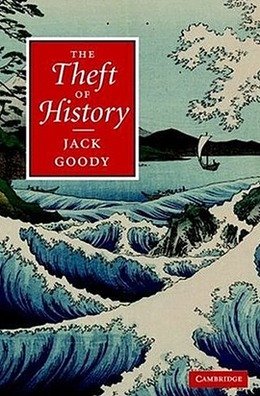
Are democracy, capitalism, freedom and the concept of romantic love unique inventions of the West? No. In his new book, anthropologist Jack Goody shows that the superiority of the West is largely unreal, even if we look to the recent past.

In “The Theft of History”, Goody criticizes both Western historical writing and his own discipline anthropology, professor Alfredo Ascanio writes in a review at OhMyNews:

For example, it was always believed that democracy was born in Athens and in fact there appeared a particular form of democracy, but democracy existed first in Carthage, even in some cities in the Mediterranean, India, China and other “tribal” societies.

Karl Max and Max Weber were wrong in their thesis about capitalism, because capitalism — despite the industrial revolution — was far more widespread. It was first a product of sowing cotton and the exploitation of silk in India and China.

In another example, Goody explains how Elias and Braudel have overemphasized the European contribution in relation to modernity, when in fact this happened first in India and China. The concept of capitalism is rather a concept of the 19-century, says Goody, which should be used more carefully and has only been used for overvaluation of the differences between Europe and Asia.

And in Asia, the reality was always more advanced than the West in art and science, even in what was considered romantic love. It was not a Western invention but is a universal sentiment that already existed.

>> read the whole review at OhMyNews

In the introduction, Goody explains the title of the book:

The ‘theft of history’ of the title refers to the take-over of history by the west. That is, the past is conceptualized and presented according to what happened on the provincial scale of Europe, often western Europe, and then imposed upon the rest of the world.

The books is inspired by his research in Africa:

After several years’ residence among African ‘tribes’ as well as in a simple kingdom in Ghana, I came to question a number of the claims Europeans make to have ‘invented’ forms of government (such as democracy), forms of kinship (such as the nuclear family), forms of exchange (such as the market), forms of justice, when embryonically at least these were widely present elsewhere.

These claims are embodied in history, both as an academic discipline and in folk discourse. Obviously there have been many great European achievements in recent times, and these have to be accounted for. But they often owed much to other urban cultures such as China.

(…)

The closer I looked at the other facets of the culture of Eurasia, and the more experience I gained of parts of India, China, and Japan, the more I felt that the sociology and history of the great states or ‘civilizations’ of Eurasia needed to be understood as variations one of another.

>> read the whole introduction (Cambridge University Press)

The book has also been reviewed by The Canadian Review of Sociology and Keith Hart.

SEE ALSO:

David Graeber: There never was a West! Democracy as Interstitial Cosmopolitanism

Amartya Sen: Democracy Isn’t ‘Western’ this text was also debated on Savage Minds

For an Anthropology of Cosmopolitanism

Ethnocentric anthropology and Working towards a global community of anthropologists

Anthropologists condemn the use of terms of “stone age” and “primitive”

cover

(LINKS UPDATED 8.9.2020) Are democracy, capitalism, freedom and the concept of romantic love unique inventions of the West? No. In his new book, anthropologist Jack Goody shows that the superiority of the West is largely unreal, even if…

Read more