search expand

“A wonderful development” – Anthropologists on the Egypt Uprising (updated 6.2.)


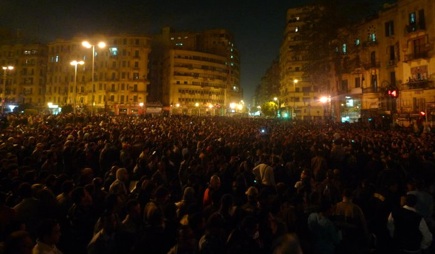
More than one million Egyptians protesting for democracy. Photo: Al Jazeera, flickr

(last updated 6.2.2011, 21:30 – updates in bold – check also new post: Saba Mahmood: Democracy is not enough – Anthropologists on the Arab revolution part II 22.2.2011 ) “The government would come down hard on even the smallest protest, and everyone would be arrested. Now, it’s as if the people are saying,  ‘We’re not going to be afraid anymore.’ “I am very, very happy for the Egyptian people. I really am. It’s a wonderful development for the Egyptian people.”

That’s how anthropologist Carolyn Fluehr-Lobban comments the recent protests in Egypt. She has spent six years since 1970 living and conducting research in the Sudan, Egypt and Tunisia and is currently teaching “Arab-Islamic Culture and the West”.

In contrast to Carolyn Fluehr-Lobban, Norwegian anthropologist Unni Wikan is worried.

In an Op-Ed in yesterday’s Aftenposten, Wikan defended Mubarak and attacked the protesters.

She claims that “Mubarak is not a despot” and that he is “considered a very honorable man”. In her opinion, Mubarak “did well / prove worthy of the situation in not giving in to the peoples’ voices on the streets”. People – especially the poor she has studied for decades – don’t care for democracy. They want stability! Without Mubarak, the “criminal mob on the streets” would lead the country into chaos, she writes. Even today, when more than a million people protested in Cairo and other cities in Egypt, she insisted that Mubarak has the peoples’ support.

Of course, her article “traveled”, among others to the Lebanese-American professor of political science As’ad AbuKhalil at at California State University, who posted a Google translation of her article and comments: “I suspect that you will both laugh and cry while reading this piece of rubbish”.

UPDATE: Comment by anthropologist David H. Price in Counterpunch: “We can expect Wikan’s incredible claims to be paraded out by Fox News and CNN as part of a distortion campaign to support Mubarak’s efforts to cling to power, all in the name of balance.”

As you might have noticed, Wikan is argueing along similar lines as the Western political elite who is about to lose an important ally in the Middle East. For them, “stability” is more important than people power, as Maximilian Forte and his co-bloggers at Zero Anthropology explain in several blog posts, among others The Fall of the American Wall: Tunisia, Egypt, and Beyond and Encircling Empire: Report #11, Focus on Egypt, Encircling Empire: Report #12, FOCUS ON EGYPT: Revolution and Counter-Revolution and The Song of the Nonaligned Nile (by Eliza Jane Darling).

Spoof on US State Departments Position on Egypt

Forte quotes Hillary Clinton who said that ”our assessment is that the Egyptian Government is stable and is looking for ways to respond to the legitimate needs and interests of the Egyptian people.”

“Let’s be really clear about what is happening in Tunisia, Egypt, perhaps soon Israel/Palestine, and now Lebanon and Yemen”, he states. “A wall of U.S. supported dictatorships and clients is collapsing.”

UPDATE: How should the West react? “The discussion in the West should focus on the factor we are responsible for and we can influence – the role our governments have played in suppressing the Egyptian people, writes Johann Hari in Huffington Post. “Your taxes have been used to arm, fund and fuel this dictatorship.”

See also Ryan Anderson’s post at Ethnografix Power, realpolitik, and freedom: Egypt and US Ideals about Freedom.

Meanwhile, over 150 academics have signed an Open letter to President Barack Obama, calling on Obama to support Egypt’s democratic movement. (You see the irony here of course… Western leaders fearing for a democratic Middle East. “The hypocrisy of western liberals is breathtaking: they publicly supported democracy, and now, when the people revolt against the tyrants on behalf of secular freedom and justice, not on behalf of religion, they are all deeply concerned”, writes Slavoj Žižek in the Guardian).

UPDATE: The American Anthropological Association signed a statement of support for Egypt. But it’s mostly about the “losses to cultural heritage” and doesn’t say anything about Mubarak.

UPDATE: Maximilian Forte ay Zero Anthropology criticizes the AAA statement. Archaeologist Rosemary Joyce addresses the issue “valuing things over people” in a very interesting post. She also questions protection of Egyptian antiquities out of concern for their status as “global cultural heritage”.
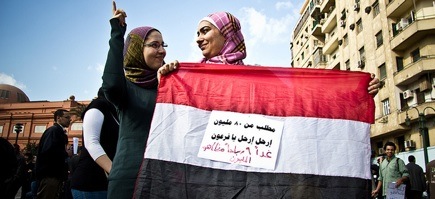

Anti-Mubarak protesters at Tahrir Square in Cairo 30.1.2011. Photo: darkroom productions, flickr

The keys to understanding what has driven millions of citizens to the streets are the tragic circumstances surrounding the deaths of two young men, writes anthropologist Linda Herrera in her text Two Faces of the Revolution at the blog Closer.

She tells the story of Mohammed Bouazizi in Tunesia who “overwhelmed by the burden of fines, debts, the humiliation of being serially harassed and beaten by police officers, and the indifference of government authorities”, set himself on fire” and the Egyptian Khaled Said who was brutally murdered by Police.

She stresses that “contrary to a number of commentators in news outlets in North America and parts of Europe the two revolutions overtaking North Africa are not motivated by Islamism.” “These are inclusive freedom movements for civic, political, and economic rights” as this video below shows as well and is described in Robert Fisk’s report in the Independent: Secular and devout. Rich and poor. They marched together with one goal

UPDATE: In the Western hype about Islamists the Muslim Brotherhood, who denounced violence a long time ago has been demonized for too long”, says anthropologist Petra Kuppinger. “While militant Islamist groups exist, they are increasingly marginal. The Brotherhood is certainly not one of them.”

“It is a revolution without a leader”, says Adrienne Pine from the Department of Anthropology at the American University in Washington in the interview below. But that does not mean chaos. She’s blogging at http://quotha.net/

Historian Mark LeVine has conducted a great interview with the Egyptian journalist and blogger Hossam el-Hamalawy.

He gives us the bigger picture, conntects the local with the global:

Revolutions don’t happen out of the blue. It’s not because of Tunisia yesterday that we have one in Egypt mechanically the next day. You can’t isolate these protests from the last four years of labour strikes in Egypt, or from international events such as the al-Aqsa intifada and the US invasion of Iraq.

UPDATE: Anthropologist Karl Lorenz from Shippensburg University agrees. He’s not surprised about the protests. He believes that it is too late for reforms from Mubarak, because the people have wanted it for 30 years and it has not been done.

Anthropologist Daniel Martin Varisco wrote two comments All Eyes on Egypt and Yemen is not Tunisia or Egypt. Another anthropologist, William O. Beeman, explains why an Islamic Government in Egypt Might Not Be So Terrible.

UPDATE: Anthropologist Farha Ghannam writes about the rich symbolism of the Tahrir Square: “In a society sharply divided by class and gender, the square has been a place where all feel comfortable – young and elderly, rich and poor, men and women, Muslim and Christian.”

Sociologist Sherifa Zuhur shares her thoughts about the recent protests and how it is received in the West.

Anthropologist Jon Anderson questions the importance of social media – a topic that was also discussed at Savage Minds: Thinking about the importance of communications “revolutions”.

The Truth Behind The Egyptian Revolution 2011. Protesters Singing. World MUST MUST Watch!

When looking for scientific publications, I made the same experience as Barbara Miller at anthopologyworks. Most articles deal with the (very distant) past. Miller concludes:

Clearly, you will have a better chance of finding out about early cat domestication, prehistoric ships, vessel residue analysis and even infant weaning during Roman times than you will have of learning about the social dimensions of today’s street protests.
(…)
I used the single search term “Egypt,” and I chose the publication dates of 2000-2010. Nearly 400 articles popped up. In scanning through them, I found that only 10 percent were related to contemporary social life. The other 90 percent of the references are dominated by archaeology with a sprinkling of biological anthropology as well as some non-anthro sources.

The sociology/anthropology repository of the American University of Cairo hosts several relevant publications.

Mats Ivarsson from the University in Lund (Sweden) has written a paper that sounds interesting: Impact of authoritarian pressure on the political blogosphere in Egypt. He “proposes the hypothesis that an authoritarian state actually will strengthen the quality of the information disseminated in the blogosphere” (pdf)

Then I stumpled upon the thesis Youth and internet in Egyptian party politics : balancing authoritarianism with agency in a condition of negative peace by Tone-Rita Henriksen from the University of Tromsø, Norway (pdf).

"Bravest girl in Egypt" translated into English

This is just a small selection of texts about the ongoing revolution in Egypt and around.

Maybe the best and most comprehensive round-up with links to tons of articles (and less chaotic than this one here) can be found at the blog Closer, compiled by anthropologist Martijn de Koning: Closing the week 5 – Featuring the Tunisia & Egypt Uprising

The Middle East blog tabsir.net has a round up What the Arab papers say

For more round-ups see posts by anthro-blogger Erkan Saka who has been active as usual, se among others Registering a revolution. Hail to the brave people of Egypt. A roundup and – media anthropologist John Postill’s bookmarks – mainly about the role of media in the Tunesia and Egypt uprisings.

My favorite news souces are Al-Jazeera (especially their live stream) and – as usual – Global Voices.

There, Gina Cardenas highlights women’s role in her post Egypt: Protesting Women Celebrated Online, a topic that has not been given enough media attention.

Very interesting also Egypt: A Voice in the Blackout, Thanks to Google and Twitter, showcasing the power of Egyptian peoples’ transnational ties and new technology.

I close this post with Global Voices video collection Egypt: Solidarity Pours in from Around the World

Riz Khan - Tariq Ramadan and Slavoj Zizek on the future of Egyptian politics

“Stupid multiculturalism, no clash of civilisations: When we’re fighting tyrants we’re universalists and building global solidarity. I’m proud of the Egyptians! They understand democracy better than we in the West (Zizek) – “This is the time to support Egypt” (Ramadan)

Check also new post 22.2.2011: Saba Mahmood: Democracy is not enough – Anthropologists on the Arab revolution part II

More than one million Egyptians protesting for democracy. Photo: Al Jazeera, flickr

(last updated 6.2.2011, 21:30 - updates in bold - check also new post: Saba Mahmood: Democracy is not enough - Anthropologists on the Arab revolution part II 22.2.2011 )…
Read more

Unni Wikan støtter Mubarak

Merkelig verden. I flere dager har vi nå vært vitne til et bredt folkelig opprør mot et udemokratisk styre, og for demokrati i Egypt. Men i en kronikk i Aftenposten forsvarer Unni Wikan mannen som har styrt Egypt i 30 år: “Mubarak er ingen despot. Han har vist seg situasjonen verdig ved ikke å gi etter for demonstranter som er ute av kontroll.”

Folk vil ikke ha demokrati, men “ro, trygghet, stabilitet, få livet sitt tilbake”. Når hun omtaler demonstrantene så først og fremst i sammenheng med “kriminelle horder og kaos”. Hun tror at “Mubarak forblir ved roret, med sitt folks støtte”.

Også i Dagsavisen skriver hun at Mubaraks eventuelle avgang “ikke vi bli møtt med bare applaus”. Mange, spesielt i fattigkvarterene, “sitter på nåler og frykter for fremtiden. Demokrati er ikke alt.” Samme budskap formidlet hun på TV2.

Wikan reagerer på lignende måte som den politiske eliten i Vesten inkl Israel: De er mer opptatt av “stabilitet” enn demokrati. Det er som Zenia Stampe skriver i Politiken: “Arabisk demokrati druknes i vestlig tavshed”.

OPPDATERINGER:

Til tross for at det er idag (1.2.2011) er 1-2 millioner på gatene i Kairo holder Wikan fast ved at Mubarak har befolkningen med seg. Hun mener media har “gitt et skjevt bilde” av det som skjer i Egypt. Journalistene følger strømmen og har ikke har kontakt med folkedypet, påstår hun.

Etter angrepet på demonstrantene skal Unni Wikan ha sagt “Ja endelig har de som støtter Mubarak kommet på banen” ifølge Shoaib Sultan på verdidebatt.no. “Jeg tror ikke hun gleder seg over voldsbruken, men det var absolutt ingen klar fordømmelse av disse angrepene”, legger han til. Nettavisen skriver også om NRK-intervjuet. Hun sa også at “flere som tidligere har demonstrert for å få Mubarak til å gå av som president har byttet side”.

Nå har jeg laget en oversikt over reaksjoner fra antropologer internasjonalt.

REAKSJONER

Shoaib Sultan skriver på verdidebatt.no at Unni Wikan argumenterer mot stråmenn og skaper skremselsbilder.

“Ikke bare er Wikans beskrivelse en forenkling av samfunnet hun snakker om, men den er også helt på linje med det regimet i Egypt har forsøkt å overtale folket med så lenge at de tror på det selv”, skriver Hanna Yousef i Aftenposten

Mubarak har ikke mye å vise til, mener Unger Bigum (også Aftenposten)

“Unni Wikans debattinnlegg i Aftenposten mandag, er mildt sagt ukorrekt og viser at hennes analyse er gått ut på dato”, skriver Mohamed Mahgoub. Det er de unge, velutdannede folk som har reist seg og talt, mens Wikans kilder i Egypt er de fattigste, uten utdannelse (Aftenposten 3.2.11)

Kronikken ble sendt verden rundt og havnet også hos antropologen David Price som kritiserer Wikan i Counterpunch:

Though Wikan has been working in Egypt since the late 1960s and is famous for her work studying Egypt’s urban poor, her analysis is unrecognizable to me as representing the mainstream views of the Egyptians.

Magnus på Polytropical kommenterer denne saken. Han kritiserer ikke Wikan, men belyser “hva som skjer når man tar et avvikende standpunkt”, se Veien pendelen svinger. Wikan får ros på høyreradikale document.no, der vi også får vite at hun på TV skal ha sagt at demonstrantene er “kjøpt og betalt”, se Modige Unni Wikan.

Spoof on US State Departments Position on Egypt

For mer bakgrunn se bl.a. intervju med Mona Abdel-Fadil i Morgenbladet og intervjuet med Hossam el-Hamalawy på Al Jazeera. Sjekk også Al Jazeeras Live Stream og spesialsider.

Omfattende analyser finner vi også på Global Voices og Zero Anthropology. Sjekk også reaksjoner fra antropologer internasjonalt

SE OGSÅ:

Bokanmeldelse: Unni Wikan: «Medmennesker. 35 år i Kairos bakgater»

Unni Wikan knebler Sindre Bangstad? Morgenbladet = Se og Hør?

Hvor “vestlig” er menneskerettighetene?

På feltarbeid blant poeter og opprørere i Paris

Merkelig verden. I flere dager har vi nå vært vitne til et bredt folkelig opprør mot et udemokratisk styre, og for demokrati i Egypt. Men i en kronikk i Aftenposten forsvarer Unni Wikan mannen som har styrt Egypt i…

Read more

Ägypten: Warum hat der Westen Angst vor Demokratie?

Warum freuen sich die Politiker im Westen nicht, wenn die Ägypter für Demokratie kämpfen? Warum diese Besorgnis über die Sehnsucht nach Demokratie? Diese Fragen diskutiert Ethnologin Katrin Zinoun auf ihrem Blog dialogtexte.

Arabischen bzw. muslimischen Einwanderern wird oft vorgeworfen, dass für sie Demokratie ein Fremdwort sei. “Der Westen stellt sich in dieser Situation gern als Gönner dar, der den armen unterentwickelten Menschen in fernen Weltregionen die Demokratie bringt”, so Zinoun. “In einigen Ländern führen sie sogar blutige Kriege, um die Menschen endlich von unserer wunderbaren Demokratie zu überzeugen.”

Doch gleichzeitig unterstützt der Westen undemokratische Regierungen wie z.B. in Ägypten. Nun, wo die Zukunft Mubaraks gefährdet ist, sind die Politiker besorgt:

Die meisten westlichen Regierungen beobachten die Situation. Und sie sind besorgt – besorgt über die drohende Instabilität und die Auswirkungen auf die eigenen Länder. Sie fordern ein Ende der Gewalt, Durchsetzung von Menschenrechten usw. Aber kein Wort der Freude über die lang geforderte Demokratisierung und das nun endlich ausbrechende Verlangen danach. Keine Forderung nach Mubaraks Rücktritt.

>> weiter bei dialogtexte

“Menschen – nicht Medien – revolitieren, meint derweil Philipp Budka auf dem Blog Initiative Teilnehmende Medienbeobachtung des Instituts für Kultur- und Sozialanthropologie in Wien. “Auch im Zeitalter von Facebook & Co. sind es die Menschen auf den Straßen, die die entscheidenden Handlungen setzen, um „Revolutionen“ herbeizuführen oder eben nicht.”

Kathrin Sharaf ist Ethnologin an der Universität Freiburg und promoviert zu “virtuellen” Freundschaftsbeziehungen Kairoer Jugendlicher. Im Gespräch mit dem Freiburger Stadtmagazin fudder.de erzählt die “Halbägypterin” von der Popularität sozialer Netzwerkseiten im Netz. „Facebook erreicht alle – die Politischen und auch die Unpolitischen“. Die Kinder, die Eltern, selbst die Großeltern pflegen einen Account.

Doch auch sie warnt vor einer “falschen Glorifizierung des Internets”. Es sei nur Plattform für den Frust der ägyptischen Jugend, “selber handeln ist eine ganz andere Kategorie“.

>> weiter bei fudder.de

AKTUALISIERUNG: Nun ist eine erste Uebersicht über internationale Reaktionen von Ethnologen/Anthropologen fertig.

SIEHE AUCH:

David Graeber: There never was a West! Democracy as Interstitial Cosmopolitanism

Jack Goody: “The West has never been superior”

Keith Hart and Thomas Hylland Eriksen: This is 21st century anthropology

Warum freuen sich die Politiker im Westen nicht, wenn die Ägypter für Demokratie kämpfen? Warum diese Besorgnis über die Sehnsucht nach Demokratie? Diese Fragen diskutiert Ethnologin Katrin Zinoun auf ihrem Blog dialogtexte.

Arabischen bzw. muslimischen Einwanderern wird oft vorgeworfen, dass…

Read more

Pakistanischer Ethnologe studiert Kölner Karneval

“Zuerst habe ich gar keinen Sinn darin entdeckt, und es widersprach ganz meiner Vorstellung von Deutschland, es war ein Gegenbild von Rationalität. Aber als Ethnologe konnte ich so etwas ja nicht liegen lassen: Ich wollte den Sinn von all dem herauskriegen. Das habe ich mir 2010 angeschaut.”

Das sagt Ethnologieprofessor Azam Chaudhary in einem Interview mit der Kölnischen Rundschau. Er war soeben auf Feldforschung in Köln, um die dortige Karnevalskultur zu erforschen.

Chaudhary hat in den 90er-Jahren in Heidelberg studiert und promoviert. Vor vier-fünf Jahren studierte er Gemeindepolitik und Bürokratie in einem kleinen Dorf im Heidelberger Umland (bei Oberpleis).

Ich habe auf die Schnelle nichts im Netz von ihm gefunden. Die meisten Publikationen scheinen schwer zugänglich zu sein.

Er ist erfreulicherweise nicht der einzige Ethnologe aus Ländern, die hauptsächlich von “westlichen” Ethnologen erforscht werden, die nun ihr Augenmerk auf den “Westen” richten, siehe u.a diese früheren Beiträge:

>> Ein Ethnologe aus Pakistan bei den Deutschen in Sauberteich

>> “Draußen nur Kännchen” – Ethnologe Asfa-Wossen Asserate redet ueber Deutschland

>> Deutschlandforschung: “Deutsche Hunde – Ein Beitrag zum Verstehen deutscher Menschen”

>> How racist is American anthropology? Or: How come calls to “anthropologize the West not brought forth much fruit?

"Zuerst habe ich gar keinen Sinn darin entdeckt, und es widersprach ganz meiner Vorstellung von Deutschland, es war ein Gegenbild von Rationalität. Aber als Ethnologe konnte ich so etwas ja nicht liegen lassen: Ich wollte den Sinn von all dem…

Read more

Paperless underclass exposes dark side of Europe


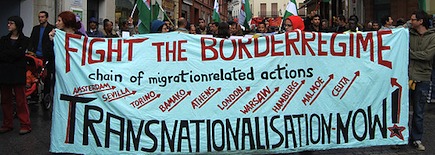
Demonstration in Sevilla. Photo: No Border Network, flickr

(Draft) “All human beings are born free and equal in dignity and rights.” These noble words in the Universal Declaration of Human Rights might be true in some distant part on this planet, but certainly not in Europe.

Here, peoples’ rights are dependent on their nationality. While I, with my German EU passport may travel and live nearly everywhere I want, people from countries like Egypt, Syria or Pakistan cannot. Europe has put much effort in building different kind of walls to prevent certain categories of people from entering. While wealthier peoples’ migration is celebrated, poorer peoples’ migration is criminalized. Anthropologist Owen Sichone calls this policy “Global apartheid”.

Two weeks ago, eight Norwegian police men arrested 25 year old Maria Amelie, an award winning book author, blogger and former anthropology student, born in North Ossetia. She had just finished her lecture at the Nansen Academy – the Norwegian Humanistic Academy about being paperless, undocumented, “illegal” migrant. This happened just three months after she had published her bok “Ulovlig norsk” (Illegally Norwegian), and one month after she was named “Norwegian of the Year” by Norway’s only cosmopolitan-minded magazine, Ny Tid.

Maria Amelie (her real name is Madina Salamova) is one of those 18 000 illegalized migrants in Norway who live here without any rights at all. No access to healthcare, education or work. They cannot open an bank account, they don’t get an ID-number, they actually don’t exist officially. Even helping them is forbidden.

Here is a video from Russia Today about Maria Amelie and a demonstration i Oslo for better rights for undocumented migrants. See related news story

Yesterday, despite lots of demonstrations and media attention, she was thrown out of Norway, where she has lived since she was 16, and deported to Russia. For Prime Minister Jens Stoltenberg and his red-green government, it was important to make clear that they don’t tolerate people like her. The Norwegian government is responsible for the deportation of hundreds of individuals and families – usually in the middle of the night without any prior notice. Media in Norway has done a good job in highlighting the plight of these people who all have a unique story to tell.

Read more:

Norway Expels Migrant Celebrity (Moscow Times, 25.1.2011)

Human rights court slams EU asylum policy as inhumane (Deutsche Wele, 21.1.2011)

‘No One Is Illegal’ Campaign aims to protect Norway’s ‘paperless’ refugees (Women News Network 8.12.2010)

SEE ALSO:

The “illegal” anthropologist: Shahram Khosravi’s Auto-Ethnography of Borders

“Human smugglers fight global apartheid”

“Anthropologists Should Participate in the Current Immigration Debate”

No more conferences in Arizona: Anthropologists condemn Immigration Law

How to challenge Us-and-Them thinking? Interview with Thomas Hylland Eriksen

Why borders don’t help – An engaged anthropology of the US-Mexican border

David Graeber: There never was a West! Democracy as Interstitial Cosmopolitanism

For an Anthropology of Cosmopolitanism

Interview with Sámi musician Mari Boine: Dreams about a world without borders

For free migration: Open the borders!

Demonstration in Sevilla. Photo: No Border Network, flickr

(Draft) "All human beings are born free and equal in dignity and rights." These noble words in the Universal Declaration of Human Rights might be true in some distant part on this planet,…

Read more