search expand

Reindrift = samer mot nordmenn?


Running. Foto: zetson / Bada Bing, flickr

(Lenker oppdatert 4.12.2020) Bønder og samer krangler om reinen, skriver Aftenposten. Men det første som antropolog Cecilie Elen Myrnes la merke til var vennskap mellom nordmenn og samer. Nordmenn var til og med integrert i den daglige reindriften.

“Til min store overraskelse, var vennskap mellom samer og fastboende noe av det første jeg observerte i felten”, skriver Myrnes i masteroppgaven Vi møtes på halvveien? En studie av relasjoner mellom den fastboende befolkningen og reindriftssamer i et sørsamisk område.

Som i Finnmark har det vært en del konflikter knyttet til reindriften i Sør-Trøndelag, også etter Selbu-dommen. Men å framstille konflikten som etnisk slik det ofte gjøres i mediene (“nordmenn mot samer”) har Myrnes lite sans for. Nettverk som krysser etniske grenser er nemlig heller regelen enn unntaket i det sørsamiske området.

Antropologen – som har norsk-samisk-kvensk familiebakgrunn – var spesielt overrasket over at ikke-samiske nordmenn er integrert i reindriften. På en vårflytting trodde hun først først at alle som var med var reindriftssamer. Men der tok hun feil. Fem av dem var ikke samer, men venner av reineierne. De hadde vedlikeholdt nære relasjoner til samene over mange år og ble så godt kjent med reindriften at de har fått status som ”innenfor” i reindriften selv om de ikke var samer.

“Det at nordmenn blir inkludert i så stor grad i den samiske reindriftskulturene var ikke jeg kjent med”, innrømmer hun.

Mange reineiere har dessuten funnet sine ektefeller og samboere i den norske lokalbefolkningen. Mange fra den norske lokalbefolkningen har altså slektninger eller har et utvidet nettverk hvor samer inngår i vennekretsen. Man kan derfor kunne anta at de etniske grensene blir visket ut i noen grad, skriver forskeren.

Hun skriver også om ulike typer økonomisk samarbeid og om bytterelasjoner som er enda mer utpreget enn verdde-ordningen som Harald Eidheim hadde beskrevet tidligere. Hun minner på at dagens reindrift også skaper arbeidsplasser for ikke-samer.

“Selv om konflikt om utmarksressursene har vært sentral i relasjonene mellom samer og nordmenn, så har ikke de økonomiske interessene stått i veien for et symbiotisk forhold mellom partene”, konkluderer hun.

Man kan være litt overrasket over at hun var så overrasket over at det fantes så mange “transetniske” nettverk. Men det er nok slik at den offentlige urfolksdiskursen er preget av svart-hvit-tenkning som usynliggjør nettopp slike forbindelser.

>> last ned oppgaven fra Munin, “Universitetet i Tromsøs åpne vitenarkiv”

Hvor viktig det er at forskere synliggjør forbindelsene mellom menneskene, forklarte kulturhistoriker Devleena Ghosh nylig på et seminar. I en annen masteroppgave beskriver antropolog Tereza Kuldova viktigheten av kryssende nettverk for fredelig sameksistens mellom hinduer og muslimer i Lucknow, India.

Running. Foto: zetson / Bada Bing, flickr

(Lenker oppdatert 4.12.2020) Bønder og samer krangler om reinen, skriver Aftenposten. Men det første som antropolog Cecilie Elen Myrnes la merke til var vennskap mellom nordmenn og samer. Nordmenn var til og…

Read more

The world’s only anthropology professor of indie music?

Arctic Monkeys @ Explanda del Estadio Azteca. Photo: monophonic.grrrl / Mariel A. M., flickr

“Ask the indie professor” is the name of a new series in the Guardian. The indie professor in question is Wendy Fonarow. At a music festival she was recently introduced as “the world’s only professor of indie music”.

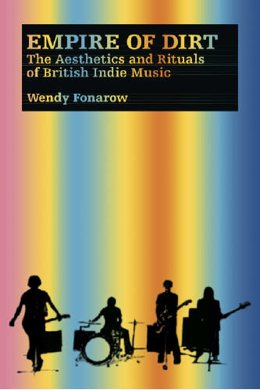
“I’m not sure if I’m the only indie professor, but I’ve spent the last 18 years recording, examining and writing about the culture of indie and the international music industry”, Wendy Fonorow writes in her opening post. Her book “Empire of Dirt: The Aesthetics and Rituals of British Indie Music” tackles questions such as “Why are drummers the most ridiculed band members?”, she adds.

The readers of this new series are invited to ask questions. “So if you are curious about why cassettes are the new vinyl, or whatever else takes your fancy, here is your chance to ask”, she writes. “And please someone ask me about why Americans think they invented indie.”

After one day, there are already more than 250 comments.

The Guardian presented her book two years ago.

Here is what she according to the Guardian writes about indie culture and religion:

“Religious narratives show up in all expressive forms, from politics to music. I see a lot of the religious narrative of Puritanism in the indie music scene; the idea that, to have the pure divine experience, it has to be direct and unmediated. So the smaller and more intimate a show is, the ‘truer’ fans believe their experience was, compared to someone who saw them later on in a bigger venue. That’s why so many people claim to have seen the Sex Pistols at the 100 Club. You can also find the aesthetic of Puritanism in the way indie people present themselves, such as childlike clothing, this idea of returning to the golden age of childhood or the musical past.”

Or here about music as ethnicity:

One of my ex-students once said ‘music is my ethnicity’. People want to find other people who are like-minded so instead of finding their ethnic identity through birth they find it through aesthetic preferences and that becomes their identity. For each one of those music movements, there are modes of display. Desmond Morris talked about how different earrings can signify where you are in the age grade of certain tribes in central Africa. To outsiders these displays are subtle or hard to notice at all.”

Interesting! But it seems the anthropologist is extremely fond of theory and might tend to over-analyse her informants. Here is how the Guardian begins the presentation:

Remember that time you were crowd surfing at an Arctic Monkeys gig and thought you were just having a drunken laugh? Rubbish! You were, in fact, being “collaborative in a unique social space, expressing super-intimacy with strangers and rejecting the self-aggrandising that comes with stage-diving”. Oh yes you were. And that time you were standing at the bar and thought you were just, well, thirsty? Not at all: you were probably just “proving your credentials as an industry professional” or “communicating to others a disinterest in the act”.

These are the theories of professor Wendy Fonarow, anthropologist at UCLA in California and the author of Empire Of Dirt: The Aesthetics And Rituals Of British Indie Music.

Her book has received a lot of positive reviews, while Pichfork reviewer William Bower is less convined by the book and its language. Check also Wendy Fonarow’s website at http://www.indiegoddess.com/

SEE ALSO:

”Eurovision produces a new form of unity”

Hindi Film Songs and the Barriers between Ethnomusicology and Anthropology

Reggae, Punk and Death Metal: An Ethnography from the unknown Bali

Multimedia Music Ethnography of Yodelling and Alphorn Blowing

“Pop culture is a powerful tool to promote national integration”

Arctic Monkeys @ Explanda del Estadio Azteca. Photo: monophonic.grrrl / Mariel A. M., flickr

“Ask the indie professor” is the name of a new series in the Guardian. The indie professor in question is Wendy Fonarow. At a music festival…

Read more

Thesis: That’s why there is peace


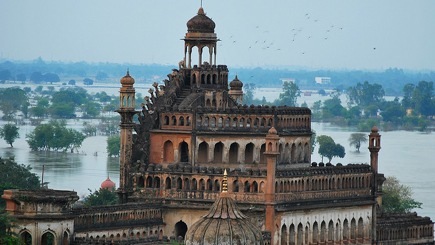
The Rumi Darwaza (“the Turkish Gate”) in Lucknow. Foto: Himalayan Trails / Rajesh, flickr

Why are some areas of this world more peaceful than others? In her master’s thesis Networks That Make A Difference, anthropologist Tereza Kuldova explains why the Indian city of Lucknow has remained peaceful throughout its history, even throughout such events as the Partition of India in 1947, and the demolition of Babri mosque in 1992 by Hindu nationalists in Ayodhya, less than 100 km from Lucknow.

“In contrast to the vast majority of studies concerned with communal violence in general and the Hindu-Muslim violence in India in particular, I opt the opposite point of departure, the one of communal peace”, Kuldova writes who is currently PhD fellow at the Museum of Cultural History in Oslo and author of several book reviews here at antropologi.info.

The heart of the peaceful nature of Lucknow is according to her “a particular blend of local history and networks of economic dependency which cut across the boundaries of class, caste, religion and locality. These networks are produced by the local embroidery industry, known under the name Chikan. Chikan is a traditional Muslim craft, and traded mostly by Hindu businessmen. In the last two decades there were more and more Muslims among the traders and Hindus among the embroiderers.

Chikan embroidery. Foto: Joey Berzowska, flickr

The Chikan industry gives employment to about 20 percent of the city’s population. It integrates people of different origins – rural, urban, lower class, middle class, men, women, Hindus, Muslims and creates according to her “an incredible network of mutual dependency, obligations and expectations”.

Religion is often used by political leaders to polarize people. It is rarely the main source of conflicts. These economic networks of interdependency, writes Tereza Kuldova, neutralize the polarizing strategies of the political leaders and lessen the chances of the occurrence of the communal tension. They lead to the “priority of the processes of togethering” as opposed to the “processes of othering”:

The growth of the industry and these networks, especially after 1990s, that is noticeably connected to the emergence and the ideology of the Hindu nationalism, has at the same time prevented the negative effects of this ideology, which have been violently felt in Lucknow’s neighbouring areas. This happened by expanding the cross-cutting networks and by turning a craft, which could have possibly been labelled as a “Muslim” craft, into a “traditionally Indian” craft. Chikan has been turned into embroidery which is worn by both Muslims and Hindus to express their Indianness, sense for tradition and fashion.

Additionally, Lucknow is by its inhabitants imagined as a peaceful and tolerant city, as the city of the Nawabs, rulers who bridged faiths:

Almost all accounts of the oral history that I gathered began like this: “In the times of Nawabs, the arts and architecture flourished, it was the time when a Muslim king danced as Lord Krishna…now where you can see that”. The Nawabs thus became associated with secularism; it is them who made Lucknow a “peaceful, clean and a neat city”

You don’t have to be born in Lucknow to be a Lakhnavi:

This imagination of anything or anyone as “Lakhnavi” goes in result beyond the dichotomy of Muslim vs. Hindu; it is rather about belonging to a particular place, which is populated by “Lakhnavis”, first and foremost.

The most persistent logic of the reasoning of why Lucknow is a peaceful city thus goes (tautologically enough) in the field as follows: “Lucknow is a peaceful city, because it is Lucknow, Lakhnavis do not fight, it has always been like that here and anyone who comes here just has to adopt that culture” (From a conversation with a Hindu businessman, 25.3.08.)
(…)
The discourse of the mythical past seems to work hand in hand with the economic structures and the social and economic networks in the city, creating both economic and discursive basis for the establishment of “relaxed” communal relationships.

As consequence of her findings, Tereza Kuldova encourages anthropologists to think rather and in terms of identifications than identities and in terms of networks than dichotomies:

Through the Chikan industry and through Chikan as a commodity, we can learn something about the fluidity of the social systems, about change and continuity, about the importance of the cross-cutting networks, about the discourses which govern the market and people’s choices and last but not least about the experience of modernity in India.

(…)

We have even seen that what is usually considered as unchangeable identities, particularly in the Indian context, namely the religious identities, are as mutable as any other. They are identifications, that might be at times stronger, at times weaker and at other times they might be replaced by new ones. People play with these identifications in a similar way as the popular Bollywood cinema does. (…) The concept of identification thus, being much richer, gives us more space to acknowledge the discursive shifts, which occur when the identifications are played out. At the same time as it acknowledges the situational and relational character of identity.

(…)
The network approach reminds us of the complexity of the social life and its situations, as well as of the impossibility to divide and classify the flow of social and economic interactions into clear-cut categories. (…)
Anthropology in general and I believe this study in particular, “has the authority and the ability to collapse a number of counterproductive dichotomies: the local and the global, the virtual and the real, the place-bound and the “non-place”, the universal and the particular. In real-life settings such contrasts evaporate” (Eriksen 2003: 15). “The “India”, where the past is inserted into the present and then projected into the future, questions the colonial dichotomies of “India” vs. “West”, “modernity” vs. “tradition”” (Favero 2005:24).

>> download the thesis

SEE ALSO:

Why more scholarship on war than peace?

– Highlight the connections between people!

How to challenge Us-and-Them thinking? Interview with Thomas Hylland Eriksen

Mahmood Mamdani: “Peace cannot be built on humanitarian intervention”

An Anthropological Challenge to Assumptions about War and Violence

Applied anthropology: A wedding ceremony in support of durable solutions in West Timor

Presenting 2nd generation Multi-Sited Ethnography

The Rumi Darwaza ("the Turkish Gate") in Lucknow. Foto: Himalayan Trails / Rajesh, flickr

Why are some areas of this world more peaceful than others? In her master’s thesis Networks That Make A Difference, anthropologist Tereza Kuldova explains why…

Read more

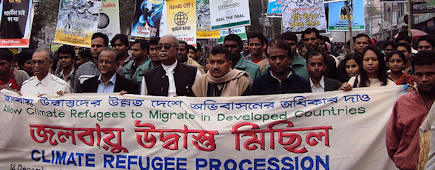
For more anthropology of climate change


Photo: The World Wants a Real Deal, flickr

In the recent issue of Imponderabilia Heid Jerstad criticizes the lack of anthropological research on climate change. Climate change is only present on the margins of anthropological research, Jerstad claims. A similar critique was formulated by Simon Batterbury in his article Anthropology and global warming: the need for environmental engagement.

But several climate anthropologists have been in the news recently. In an interview with the Borneo Post, anthropologist Bob Pokrant addresses climate change in Borneo. To tackle the climate change issue, he proposed using the ‘adaption approach’ instead of the ‘mitigation approach’:

By mitigation, we mean reducing the sources of greenhouse effect. By adaption, we mean recognising that climate change is happening and then work out a programme to reduce the social vulnerability of those affected. We have to empower the people to take the future in their own hands. In countries affected by climate change most, their people’s capacity to adapt must be built up.

Fight global warming ‘with traditional methods’, urged Pietro Laureano. architect, town planer and anthropologist. Traditional water management methods from the Sahara and Ethiopia and Iraq’s Babylon area could be used alongside newer technologies such as solar power to prevent desertification and energy wastage. See also interview with Laureano and his paper Traditional Techniques of Water Management a New Model for a Sustainable Town and Landscape. From the First Water Harvesting Surfaces to Paleolithic Hydraulic Labyrinths.

Environmental anthropologist Kenny Broad was interviewed by Hawaii 24/7. As an anthropologist “his focus is bridging the physical and social aspects of science, specifically the human-environment relationship along coastlines and the impacts of climate change.”

For as Linda Connor says, climate change is a cultural crisis, – an aspect that in her opinion is ignored in much of the technical, economic and political talk of policies and solutions.

A few weeks ago, Susan Crate’s research on climate change in Siberia was presented. On her website lots of papers can be downloaded, for example the most recent one Bull of Winter? Grappling with the Cultural Implications of and Anthropology’s Role(s) in Global Climate Change (pdf). Together with Marc Nuttall, she edited the book Anthropology and Climate Change. From Encounters to Actions. See also interview with Nuttall on CBC News “Human face of climate change: Weather out of its mind”.

At the University of Copenhagen, anthropologist Kirsten Hastrup is the leader of the interdisciplinary climate change research project Waterworlds. In an interview, she explains the relevance of historical anthropology for today’s climate change.

See also Climate Change and Small Island Developing States: A Critical Review by Ilan Kelman and Jennifer J. West (Ecological and Environmental Anthropology, Vol 5, No 1 (2009)) and Waterworld1: the heritage dimensions of ‘climate change’ in the Pacific by Rosita Henry and William Jeffery as well as information about climate refugees and my earlier post Why Siberian nomads cope so well with climate change. For even more literature see Bibliography for the anthropology of climate change.

Photo: The World Wants a Real Deal, flickr

In the recent issue of Imponderabilia Heid Jerstad criticizes the lack of anthropological research on climate change. Climate change is only present on the margins of anthropological research, Jerstad claims. A similar critique…

Read more

Antropologi og konflikt: “Bare det å skrive om det er viktig”

Jeg har begynt å jobbe for Sosialantropologisk institutt i Oslo (SAI) og intervjuet Nerina Weiss. Hun holder på å avslutte sin doktorgrad om konflikten i de kurdiske områdene i Øst-Tyrkia.

Det er i et område som har vært forbudt for utenlandske forskere inntil nylig, og tyrkiske forskere har fått munnkurv. Men folk har et stort behov for å fortelle hva som har skjedd. Bare det å skrive om det er viktig, sier hun. Og noe av det viktigste er å dekonstruere kategoriene ofre og overgripere, å få fram de mange stemmene som ikke blir hørt. Nerina Weiss etterlyser dessuten mer diskusjon om forskningsetikk i konfliktsituasjoner.

>> les hele intervjuet

Antropolog Kristina Johansen samler også historier om en voldelig konflikt. Hun har forsket og jobbet mye i Colombia. Høsten 2004 leverte hun ved Universitetet i Bergen hovedoppgaven ”Som i en boble. Velstående colombianere – vold, usikkerhet og kamp om rom“. I det siste har hun igjen reist rundt omkring i landet og lagt ut mange reportasjer på bloggen sin – på både spansk og norsk.

Også hun skriver om glemte historier og uhørte stemmer. “Hvordan kan jeg si til Blanca at hennes historie – drapet på datteren, flukten fra hjembyen og mangelen på rettsforfølgelse av de ansvarlige – ikke har noen nyhetsverdi i Norge?”, spør hun i teksten Drap uten nyhetsverdi.

I San Onofre: Motstandskamp og glemt historie forteller hun blant annet om Amaury Mogueas kamp for jord og sosiale endringer. Det er “en historie som ikke finnes i historiebøkene, men som fortjener å bli hørt”: Etter tre drapsforsøk, og etter å ha flyktet fra San Onofre til Barranquilla og videre til Bogotá, lever han i dag i hovedstaden, hvor han studerer sosiologi og arbeider for internt fordrevnes rettigheter.

“Jeg har så mange historier jeg ikke vet hvordan jeg skal formidle”, innrømmer hun i et tidligere innlegg kalt “Minnenes veier”:

Det er så vanskelig å snakke om forfølgelsen og volden, det skitne spillet til myndighetene – som sier én ting og gjør noe helt annet – uten at det bare framstår som en surrealistisk, uforståelig verden som alltid har vært og alltid vil være voldelig. Når jeg rusler nedover Bogstadveien føler jeg meg fremmedgjort i mitt eget land.
(…)
Når jeg observerer fredelige landskap i Norge, klarer jeg ikke helt å glemme at det fins andre byer, skoger, elver og landeveier hvor folk sliter, hvor folk prøver å gjøre noe med situasjonen sin, og stadig blir slått ned på i dette forsøket. Jeg tenker at jeg har fått høre disse historiene, og at det ikke bare er for å bære dem med meg der jeg sitter på en eller annen buss, et eller annet tog og minnes.

SE OGSÅ

Fra akademia til menneskerettsarbeid: “Nesten glemt hvordan det er å brenne for noe”

– Føles bra å anvende antropologien i konfliktsituasjoner: Intervju med Ingvild Solvang

Få utstillingsobjektene til å snakke! Intervju med Daniel Winfree Papuga om antropologi og “oral histories”

“Voices”: Anthropologist publishes Palestinian women’s histories

Antropologer forklarer volden i Jamaica

Hva sier forskere om Gaza-krigen?

Antropologer: – Regnskogvern forverrer Kongokonflikten

Kvinner: Ikke ofre, men aktive krigsdeltakere

Conflict Resolution and Anthropology: Why more scholarship on violence than on peace?

Jeg har begynt å jobbe for Sosialantropologisk institutt i Oslo (SAI) og intervjuet Nerina Weiss. Hun holder på å avslutte sin doktorgrad om konflikten i de kurdiske områdene i Øst-Tyrkia.

Det er i et område som har vært forbudt for…

Read more