search expand

Dialektus Festival – European Documentary and Anthropological Film Festival

Budapest 16.-22.6.2010

Attracting ever more attention both in Hungary and throughout Europe, Dialektus Festival pays special attention to creating opportunities for filmmakers and other trade representatives to meet each other and their audience on professional forums, targeted, thematical events besides creating an informal, inspiring, buoyant festival-atmosphere. All because we need documentaries and documentary needs us too: to discover its priceless values, to point out to the possibilities it carries, to celebrate it, to talk about it – to treat it as well as it deserves. This is our way of encouraging dialogue between European filmmakers of different countries and different cultural backgrounds, to boost the popularity and strenghten the distribution of the documentary film.

Dialëktus Festival delayed!

Due to our main sponsor’s financial difficulties, instead of our usual March date, Dialektus Festival will take place in June this year. We’ll do our best to turn this to our advantage, with open air screenings, musical entertainment, strawberries, raspberries and a beach atmosphere! We hope the fragrant summer will do justice to the films, so we suggest daytime chillouts indoors, followed by evening garden cinema sessions with spritzers and firebugs.

The delay will not otherwise affect the usual order of the Festival. This year’s Dialektus has received 191 entries from 25 European countries, and preliminary judging is now all but finished.

Two major professional events will accompany the festival:

Docucritics’ workshop

Last year’s good memories have encouraged us to follow up the documentary film critics’ work shop with coordinators Ágnes Blaskó and Balázs Varga. focus will be on the birth of dialogue, the concepts and instruments of documentary film analysis, individual writing exercises, as well as the challenge of presenting the freshly-printed works to the audience. The workshop will be held in Hungarian.

„My Deer” Project development workshop

For the first time this year, but hopefully not the last, we are organizing a project development workshop with the support of the Visegrád Fund. We welcome those documentary projects to the workshop which are still being filmed, and are set in at least two of the Visegrád countries (Czech Republic, Poland, Hungary, Slovakia). The workshop aims to nurture coproductions and support the production of European films suitable for general distribution, giving a sensitive view of the culture and everydays of Visegrád countries. The workshop will culminate in a trial pitch.

http://www.dialektusfesztival.hu

Budapest 16.-22.6.2010

Attracting ever more attention both in Hungary and throughout Europe, Dialektus Festival pays special attention to creating opportunities for filmmakers and other trade representatives to meet each other and their audience on professional forums, targeted, thematical events besides creating…

Read more

“Encouraging to see a Muslim anthropologist studying American society”

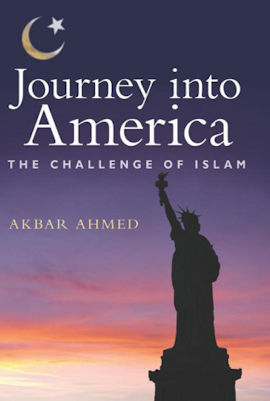
Days and weeks before the launch of the new book by anthropologist Akbar Ahmed called Journey into America: the Challenge of Islam, it was already reviewed in major Pakistani newspapers. “Usually it is Western anthropologists who study Muslim societies. It is encouraging to see a Muslim scholar returning the compliment by studying American society”, Maleeha Lodhi writes in The News.

Accompanied by several researchers, Akbar Ahmed travelled for a year to over 75 cities across the U.S., meeting a diverse array of people and visiting more than a hundred mosques.

After (too?) much research on muslim issues and media focus, it seems that eveything has been said. But his book does not seem to be one of those numerous studies on “the integration of immigrant women”. His book is also an ethnography of today’s America.

In an article in the Guardian, the anthropologist writes that he “realised that it was impossible to study Islam in America without studying America itself and its identity.”

This “reinterpretation of the competing influences that have shaped American identity” is, writes, Maleeha Lodhi, “fascinating”:

Americans, Ahmed says, need to make a choice between the concept of the country fashioned by its Founding Fathers – universal, pluralist and tolerant – , or the post-9/11 vision “which is aggressive, self-centred and suspicious of, if not hostile to, “the other”:

He traces the first and dominant primordial identity to the original white settlers of the 17th century. Fashioned by white Anglo-Saxon Protestant (WASP) settlers, this vision of a society based on justice and a rule-bound charter was however exclusionary, meant only for Christians, not Native Americans or those who were forcibly brought from Africa.

From that period also emerges a secondary identity from the pluralist tradition. This foreshadows the vision of the country’s Founding Fathers based on equality between and respect for all citizens, democracy, religious freedom, and rejection of slavery.

Dr Ahmed identifies a third identity with origins in the 17th century. This is the predatory identity which unleashed an aggressive impulse that saw Native Americans as heathens who had to be eliminated. It also justified slavery. This established the notion of zero tolerance: that any threat to society had to be permanently decimated by the full use of force. Compassion was seen as weakness and compromise as defeat.

This identity, Dr Ahmed argues persuasively, asserted itself in the post-9/11 period when America under Bush embarked on two wars and a path that saw it compromising its own laws and ideals and justifying torture and Guantanamo in the name of protecting the nation. The invasion of Iraq, the Patriot Act and secret detention centres were all actions consistent with the old predatory identity.

The book also includes a “thought-provoking comparison” between two founding fathers Thomas Jefferson and Mohammed Ali Jinnah, writes Rafia Zakaria in The Dawn. “Sadly it seems both Americans and Pakistanis are only too willing to eviscerate the commitments these two founding fathers made towards tolerance and religious pluralism.”

The anthropologist is according to Maleeha Lodhi “just as forthright in identifying the weaknesses and problems in the Muslim diaspora”. He distinguishes between three traditions: mystic (Sufism, emphasises universal humanism), modernist (balance modernity with religion) and literalist (Salafis, adhere strictly to tradition) and concludes that “modernist Muslims have provided neither leadership nor a critical mass to change the community, while mistakenly dismissing literalists as being of no consequence.”

In order to “recreate the community’s self-image and extricate it from persistent identification with 9/11 and terrorism”, Muslim American leaders need to look to the African American community. he recommends.

According to the reviewers (somehow I have the impression they’re a bit too positive…), this is a well-written book, and Daily Times reviewer Mahjabeen Islam even things it will be the “talk of the town“.

For more information see the book blog at http://journeyintoamerica.wordpress.com/ and the first chapter (pdf) as well as Ahmed’s posts at Huffington Post

Anthropologist Maximilian Forte continues his analysis of the “predatory” elements of American culture in his recent posts on Zero Anthropology, among others Team USA at the 2010 FIFA World Cup: Motivation Unthinkable without the Military and Militainment: U.S. Military Propaganda in the News Media, Hollywood, and Video Games

SEE ALSO:

Akbar Ahmed’s anthropological excursion into Islam

How can anthropology help us understand Swat and Taliban? Gustaaf Houtman interviews Akbar Ahmed

Interview with Arjun Appadurai: “An increasing and irrational fear of the minorities”

“Arabs and Muslims should be wary of anthropologists”

“The insecure American needs help by anthropologists” – AAA-meeting part II

Days and weeks before the launch of the new book by anthropologist Akbar Ahmed called Journey into America: the Challenge of Islam, it was already reviewed in major Pakistani newspapers. "Usually it is Western anthropologists who study Muslim societies. It…

Read more

(aktualisiert) Ethnologen: WM-Berichte verbreiten Vorurteile über Afrika

Man soll nicht sagen, Ethnologen würden sich nicht in aktuelle Debatten einbringen. Barbara Meier und Arne Steinforth von der Uni Münster nutzten die Fussball-WM, um einen Dauerbrenner im Fach öffentlich zu diskutieren: die exotisierende Darstellung Afrikas in den Medien.

“Noch ehe der Startschuss zur Fußball-Weltmeisterschaft (WM) in Südafrika gefallen ist, häufen sich die Schauermärchen über archaische „okkulte Praktiken“ im afrikanischen Fußball in den deutschen Medien”, schreiben sie. In vielen Berichten “fertigen die Medien einen ganzen Kontinent als irrational, archaisch und abstoßend ab und bestätigen längst überholte Vorurteile”. Die Medien hätten eine grosse Chance vertan, das Interesse an Gesellschaften Afrikas mit differenzierten Berichten zu wecken:

Schon die Wortwahl mancher Berichte zum Thema „Magie im Fußball“ diskriminiert einen ganzen Kontinent. Afrika mit seinen 53 Staaten, Tausenden von unterschiedlichen Gesellschaften und ebenso vielen Sprachen wird darin zur Heimat von nicht näher be- stimmten „Stämmen“, die ihr Schicksal blind in die Hände von „Hexenmeistern“ und „Scharlatanen“ legen. Viele Berichterstatter haben offenbar einen eingeschränkten Einblick in die Gesellschaften, über die sie schreiben – bedienen aber zuverlässig die Vorurteile ihrer Leser. Dadurch verkaufen sie ein exotisches Afrikabild, das dem der „Wilden“ und „Kannibalen“ aus Kolonialtagen in nichts nachsteht.

“Spirituelles Doping” vor dem Fussballmatch gibt es natürlich in Afrika. Aber nicht nur dort. Fußball ist überall auf der Welt von einer Vielzahl von Ritualen umgeben, auch in Deutschland:

Auch in Deutschland knüpfen Spieler, Trainer oder sogar Fans und Vereine Beziehungen zur Welt des Religiösen, wenn sie um sportlichen Erfolg ringen: Spieler berühren beim Einlaufen ins Stadion aus offenbar unerfindlichen Gründen die Seitenauslinie, ihre Brust oder ihre Stirn; Trainer tragen wochenlang rätselhafte Glückskrawatten; Fans empfinden es als Unheil verheißendes Sakrileg, ihre Fan-Trikots während der Saison zu waschen. Fußballvereine machen religiöse Führer zu Vereinsmitgliedern, richten eigene Friedhöfe für Fans ein, oder sie bauen christliche Kapellen in das spirituelle Zentrum ihrer Stadien – genau unter dem Anstoßpunkt.

>> zum Beitrag von Barbara Meier und Arne Steinforth. Mehrere Medien berichteten darüber, u.a. Focus, Stern und die Sueddeutsche (siehe vollstaendiger Medienspiegel).

Doch sind die Ethnologen so viel besser als die Medien? Afrikanet.info hat in den vergangenen Tagen viel über das Afrikabild in den Medien geschrieben. Im Beitrag Selbstbilder vs Fremdbilder stellt Simon Inou das “Afrika der Ethnologen” (“Hier lernen wir wie primitiv AfrikanerInnen sind. Wie folkloristisch unsere Kultur und Kunst sind”) den Bildern mehrerer afrikanischer Zeitschriften (“signalisieren Aufbruch, zeigen ein neues und anderes Afrika“) gegenüber. Afrikanet.info gibt auch Tips: Wie Medienmacher korrekt über Afrika berichten können

Ein Klassiker zum Thema ist der Text How to Write about Africa von Binyavanga Wainaina (siehe deutsche Uebersetzung). Auf ethno::log wurde der Text einmal in einem Klischee-Check benutzt.

AKTUALISIERUNG 14.6.10 Leider fehlen konkrete Quellenangaben im Text der Ethnologen. Doch heute bittet die Märkische Allgemeine mit folgender Schlagzeile um unsere Aufmerksamkeit VÖLKERKUNDE: Ballmagie mit Talisman Ethnologen der FU Berlin über Zauberei und die Bedeutung des Fußballs für Afrika. Platz fuer Kritik ist, da, doch der Fokus ist und bleibt die Magie. Andere Beispiele: Hexenmeister in Afrika – Fußball von allen guten Geistern verlassen (Spiegel 8.6.2010). Fußball in Afrika
Rezension von Oliver G. Becker: “Voodoo im Strafraum” und Bartholomäus Grill: “Laduuuuuma!”
(Deutschlandradio 1.5.10), Voodoo in Afrikas Fußball „Mit Leichenwasser den Gegner schwächen“ (Focus 9.6.10)

Bei dialogtexte.de gibt es Informationen zu “Fußball als transkulturelles Phänomen und “Public Viewing als religiöses Fest”

SIEHE AUCH:

World Cup Witchcraft: European Teams Turn to Magic for Aid

Ethnologe Leo Frobenius und der koloniale Blick auf Afrika

Vermitteln Ethnozentrismus und ein ueberholtes Bild von der Ethnologie?

“Gewalt gehört zu Indien wie ein gut gewürztes Currygericht” – Ethnologe kritisiert SZ

Ethnologe: Afro-Festivale schüren Vorurteile

Geldof’s Live8 and Western myths about Africa

Man soll nicht sagen, Ethnologen würden sich nicht in aktuelle Debatten einbringen. Barbara Meier und Arne Steinforth von der Uni Münster nutzten die Fussball-WM, um einen Dauerbrenner im Fach öffentlich zu diskutieren: die exotisierende Darstellung Afrikas in den Medien. …

Read more

Ethnologe war dabei: Wollte Ethnografie über Gaza-Hilfskonvoi schreiben

“Sie haben uns alles weggenommen, was die Geschichte, die Wahrheit, hätte dokumentieren können. Kameras, Filme, Fotos, Notizen – alles weg. Es war schwierig für mich, weil ich mit meinen Notizen Informationen preisgab.” Das sagt der 34-jährige Ethnologe Nikola Kosmatopoulos, der gerade seine Doktorarbeit an der Uni Zürich über Friedensaktivisten im Nahen Osten schreibt. Er war an Bord des Schiffes, das Hilfsgüter in den Gazastreifen bringen wollte und von israelischen Soldaten angegriffen wurde.

Sowohl das Schweizer Fernsehen wie 20minuten haben den Ethnologen interviewt.

Er wollte eine Ethnografie über die Fahrt schreiben, lesen wir. Es war ein kosmopolitisches Schiff. “Die Leute haben mir ihre Geschichten anvertraut”, sagt er. Doch nun sind seine Feldnotizen in den Händen israelischer Soldaten.

Der Ethnologe leitet das Projekt Governing Conflict: Expert networks in Lebanon and beyond

Ethnologe Martijn de Koning kommentiert die Berichterstattung und stellt relevante Forschung vor in seinem Beitrag Never mind the bombs, here are the poets – Freedom and #Flotilla

SIEHE AUCH:

Anthropologists on the war on Gaza (2009)

Boycott Israel? – More anthropologists on Gaza (II)

“Voices”: Anthropologist publishes e-book about Palestinian women

Telepolis über Ethnologen im Irak-Krieg: “Sollten lieber das Militär studieren”

"Sie haben uns alles weggenommen, was die Geschichte, die Wahrheit, hätte dokumentieren können. Kameras, Filme, Fotos, Notizen – alles weg. Es war schwierig für mich, weil ich mit meinen Notizen Informationen preisgab." Das sagt der 34-jährige Ethnologe Nikola Kosmatopoulos, der…

Read more

Hvorfor overlater forskere nettet til anti-akademiske krefter?

Hvorfor er norske akademikere fullstendig fraværende på sentrale offentlige arenaer – der hvor “den offentlige mening” dannes? Det vil si på blogger, wikier og på twitter for eksempel? Disse spørsmål stiller Martin Grüner Larsen i den nye utgaven av Prosa.

Klassekampens bokredaktør har skrevet noe av det beste om forskningsformidling jeg har lest på lenge.

I forhold til folk flest er akademikere fullstendig underrepresentert på nett, viser han. Hjernevask-debatten gjorde det overtydelig hvordan antiakademisk retorikk får dominere når fagfolk selv ikke tar del i den elektroniske offentligheten: I bloggosfæren, på Twitter og Facebook ble kjønnsforskningen, sosialkonstruktivismen, relativismen, ja samfunnsforskningen som sådan stemplet som udugelig:

I tider som denne, der forskningstradisjoner er under angrep og akademias grunnprinisipper trekkes i tvil, tror ansatte ved universiteter og høyskoler at opinionen kan vinnes med en og annen kronikk i papir­avisene. Hjernevaskerne vinner på walkover. Hvorfor holder forskerne seg for seg selv?

I USA er det helt annerledes, påpeker han. Der har også akademikere kommet langt mer på banen enn i Norge (gjelder forresten også antropologien. I USA er blogging er blitt mainstream blant antropologer, mens jeg føler meg ganske ensomt her på norsk…).

Ved å være fraværende på nett, viser Grüner Larsen, mister forskerne verdifulle muligheter for dialog, kunnskapstilegnelse og forskningsformidling. “Det er uforståelig at ikke akademiske institusjoner og personer allerede har fattet at bloggen er som skapt for akademisk kommunikasjon”, skriver han.

I motsetning til hva Bologna-byråkratene måtte mene, er ikke skriving og forskning to separate prosesser:

Bloggens form er skriveprosessen. Man leser, man noterer, skriver, analyserer og diskuterer – og over tid dannes en tankeverden i teksten. (…) Hyperlenken gjør referanser og diskusjoner mellom tekster og stemmer enkelt, både når man fører diskusjoner på tvers av flere blogger og andre medieplattformer, og gjennom kommentarfeltet som muliggjør intens debatt og margskribling til alle publiserte tekster. (…) På sitt beste virker denne dialogen som en konstant fagfellevurdering. De elektroniske offentlighetene har iboende kvaliteter som egner seg til akademisk arbeid, om bare forskerne hadde vært der.

Hva er så problemet? Han peker på disse tre:

(1) manglende incentiver for å drive med forsk­ningsformidling:. Det norske forskningssystemet er regulert slik at forskere drives mot å publisere rituelle tekster i prestisjetunge internasjonale fagtidsskrifter, som kun leses av en håndfull fagfeller, og som sikrer at kun ytterst få, meget spesielt interesserte nordmenn skal få tilgang til disse.

(2) Kultur for å være fagintern: Mange forskere signaliserer (åpent, eller mer skjult) skepsis til aktive og synlige kolleger. “Det virker nesten som om motviljen mot den elektroniske offentligheten handler om motvilje mot en pluralistisk, folkelig offentlighet like mye som noe annet. På dette punktet har nok kulturkjempere rett: Akademia er en elitistisk institusjon.”

(3) Manglende ferdighet til å tenke høyt og skrive kort: Vi må anerkjenne at former som Twitter og bloggen har en naturlig plass i kommunikasjonsfloraen sammen med avisen, tidsskriftet og boka, mener han: “Om du ikke kan skrive en 400 siders fagintern avhandling om ditt forskningsfelt, så er du ikke en fullkommen forsker. Men om du ikke kan komprimere sentrale teser til en 30 sekunders elevator pitch eller noen 140 tegns twittermeldinger, så gjør du nok også noe galt. Hvorfor er det så lett for norske forskere å innrømme det første, men ikke det andre?”

Om ikke akademia deltar i de elektroniske offentlighetene, så oppfyller ikke dagens forskere sin samfunnsoppgave, mener han:

Samtalen har flyttet ut i disse rommene, og det er, som alltid, akademikernes profesjonelle plikt å bidra til samtalen. Norske forskere kan ikke vente på insentivene. Det har offentligheten ikke tid til.

Ved ikke å ta i bruk formidlingsmulighetene, men overlate viktige offentlige rom til andre, gir man antiakademiske meningsytrere stort spillerom. (…) Om ikke de 99 prosentene av norske forskere som uteblir fra de elektroniske offentlighetene, kan ønske det store, trådløse kommunikasjonseksperimentet som omgir dem velkommen, så har de antiakademiske kreftene ikke bare vunnet, de har kanskje til og med rett.

>> les hele saken i Prosa

Se også Jon Hoems kommentar Om fraværet av en digital offentlighet blant akademikere (infodesign.no)

Og Martin Grüner Larsen er selvfølgelig aktiv på nett, han blogger og twitrer.

Heldigvis er denne saken altså lagt ut på nett – i motsetning til Frode Storaas’ utmerkete ideer om multimedia-antropologi på nett i Norsk antropologisk tidsskrift (NAT) som Universitetsforlaget nektet å frigi til nettpublisering i fjor høst. NAT er et tidsskrift som man ikke bør velge når man vil dele kunnskap på nett.

En bør da heller velge open access tidsskrifter, her er en oversikt. Et av de nyeste tidsskriftene prøver å bruke web2.0-teknologier, se New Open Access Journal: Anthropology Reviews: Dissent and Cultural Politics (ARDAC).

Her er en oversikt om interessante nordiske blogger (kun få antropologer). Masterbloggen er et lovende initiativ. Noen forskere har begynt å blogge på forskning.no.

På arkeologi-bloggen Ting och tankar har Åsa M. Larsson skrevet om vetenskapsblogging.

Jeg har vært opptatt av formidling på nett siden jeg startet opp antropologi.info for seks år siden, se et utvalg tidligere saker:

For mer antropologi på blogger, YouTube og Twitter!

Thomas Hylland Eriksen: – Antropologer må bli flinkere til å bruke nettet

On fieldwork: “Blogging sharpens the attention”

Paper by Erkan Saka: Blogging as a Research Tool for Ethnographic Fieldwork

Hvordan lage et akademisk tidsskrift som appellerer til flere?

Interview with Michael Wesch: How collaborative technologies change scholarship

En vitenskaplig innføring i blogging

Skriver heller blogginnlegg enn aviskronikker

Elfenbenstårn akademia: Lav interesse for publisering på nettet

Hvorfor er norske akademikere fullstendig fraværende på sentrale offentlige arenaer – der hvor "den offentlige mening" dannes? Det vil si på blogger, wikier og på twitter for eksempel? Disse spørsmål stiller Martin Grüner Larsen i den nye utgaven av Prosa.

Klassekampens…

Read more