search expand

Thomas Bargatzky – ein rechtsradikaler Ethnologe?

Er publiziert in angesehenen wissenschaftlichen Verlagen und hat auch ein Ethnologie-Einführungsbuch geschrieben. Im rechten Wochenblatt Junge Freiheit plädiert er für das Singen der Nationalhymne im Unterricht, wettert gegen den Islam und donnert “Europa muss christlich bleiben”. Thomas Bargatzky – ein rechtsradikaler Ethnologe?

Vorgestern tauchte ein Email in der Inbox auf:

“Dass es nicht nur Ethnologen gibt, die romantisierte Bilder verbreiten, sondern auch solche, die härtere Geschosse auffahren, beweist Thomas Bargatzky. Dieser ist schon länger Autor der rechtskonservativen Zeitschrift “Junge Freiheit”, die viele Schnittstellen und Kontakte mit Rechtsextremen hat.

Beigefügt waren ein paar Links zu Artikeln in der Jungen Freiheit, die ich gerade durchgelesen habe. Ja, der Ethnologe fährt in der Tat mit haerteren Geschossen auf, mit einem Gedankengut, das man bis vor etwa zehn Jahren hauptsächlich in rechtsradikalen Kreisen vorfand, nun aber stubenrein geworden ist.

Bargatzky wettert nicht nur gegen den Islam, sondern auch gegen die 68er-Generation und Homofile. Man kann ihn damit als Vertreter der neuen christlichen Rechte bezeichnen, die für konservative Familienwerte und einen ethnoreligioesen Nationalismus bekannt ist (er hat auch einiges mit anti-westlichen Okzidentalisten gemeinsam).

In Familie als kulturelle Universalie schreibt der an der Uni Bayreuth lehrende Ethnologe:

Die Familie ist ein Bollwerk gegen den Zugriff der Marktkräfte auf die Individuen. Es liegt daher auf der Hand, daß diese Kräfte über ihre Sprachrohre in den Parteien, den Nachrichtenmedien und der Unterhaltungsindustrie bei der Ehe als dem Angelpunkt der Familie in unserer Kultur ansetzen. Mit der Ehe soll zugleich die Familie aufgebrochen werden.

Vor diesem Hintergrund muß auch die Kampagne für die formelle Gleichsetzung “gleichgeschlechtlicher Lebensgemeinschaften” mit der Institution der Ehe gesehen werden. Die Ehe wird auf eine Ausdrucksform der individuellen “sexuellen Orientierung” reduziert und somit auch aus ihrer demographischen Funktion herausgelöst.
(…)
Wir dürfen nicht zulassen, daß sich – in welcher Partei auch immer – jene Fanatiker durchsetzen, die im Namen einer Totalemanzipation von der Natur uns nicht nur aus dieser, sondern aus der Kulturgemeinschaft mit dem Rest der Welt herauskatapultieren wollen.

Bargatzky liefert in seinen Texten eine akademische Legitimierung für anti-muslimische Aktivitäten. Er schreibt vom “Kampf der Kulturen” (sogar die Proteste der Jugendliche in den Pariser Vororten listet er hierfür als Bespiel auf!), von einem “Europa”, das vom “Islam” bedroht wird. Die Lösung ist christlicher Patriotismus.

In Europa muss christlich bleiben schreibt er:

Um dieser Bedrohung entgegentreten zu können, muß Europa Kraft schöpfen. Das kann jedoch nur gelingen, wenn es sich zuvor auf die Grundlagen seiner Identität besinnt. “Wer sind wir, was sind die anderen?” Bei der Suche nach einer Antwort auf diese Frage stoßen wir unweigerlich auf das Christentum, das fast zweitausend Jahre in Europa identitätsstiftend gewirkt hat.
(…)
Auf christlichem Boden wuchs die Aufklärung empor, in deren Namen ihm Kritiker und Gegner entgegentreten können. (…) Die asiatische Denkweise kreist vor allem um die Idee der Pflichten gegenüber dem Gemeinwesen, in der christlichen Tradition steht dagegen das Individuum im Fokus der Zuwendung Gottes. Nirgendwo sonst, in keiner anderen Religion, wird das Individuum so wichtig genommen. Dies ist gleichsam das Hauptgeschenk des Christentums an die Menschheit.
(…)
Die herausragende Bedeutung des Individuums weist das Christentum im Grunde als die Religion der Moderne aus. Daß gerade individualistisch gesonnene Zeitgenossen heute in exotische Religionen flüchten, die ja gerade die Auslöschung des Individuums lehren, ist eines der großen Mißverständnisse unserer Zeit.
(…)
Europa muß christlich bleiben – oder es wird nicht mehr sein.
(…)
Sorgen wir auch durch eine nationalen Eigeninteressen verpflichtete Einwanderungspolitik dafür, daß nicht eines Tages in Europa nur noch Moscheen errichtet werden!

In Leitkultur oder Patriotismus kritisiert er die “von vielen herbeigeträumte multikulturelle Gesellschaft”. In diesen globalisierten Zeiten sei ein “Bekenntnis zur Nation” wichtiger denn je:

Das Bekenntnis zur Nation ist die Antwort auf die Frage nach der deutschen Identität (…). Nur sie kann die Aufgabe lösen, in einer Zeit des verstärkten Migrationsdrucks den Bewohnern eines bestimmten staatlichen Gebildes, welchen ethnischen Hintergrund auch immer sie haben mögen, gewisse gemeinsame Überzeugungen und Orientierungen näherzubringen, ohne die ein Gemeinwesen nicht bestehen kann. Die Zugewandtheit zur Nation hat einen Namen: Patriotismus.

Er kritisiert die 68er-Generation, die “zum Verfall identitätsstiftender Institutionen” beigetragen habe. Zu diesen zählt er “Sprache, Familie, Kirche, Schulen, Universitäten, Streitkräfte, aber auch Theater, Sinfonieorchester, Opernhäuser”:

Jede dieser Institutionen stellt, für sich genommen, eine Verfallsgeschichte dar, denn seit der unseligen “Revolution” von Achtundsechzig gilt eine anti-institutionalistische Haltung in Deutschland als chic, sie ist geradezu eine Signatur unserer Zeit. Das geistig-moralische Vakuum, das heute den Ruf nach einer Leitkultur in Deutschland laut werden läßt, entstand als Folge jenes Bruchs mit tradierten Institutionen, Symbol- und Wertesystemen.

Patriotismus, schreibt er, muss seinen “Ausdruck in eingängigen Symbolen finden” – und diese müssen gepflegt werden – die USA könnte als Vorbild dienen::

Könnten nicht auch wir in Deutschland von anderen Nationen etwas über die Pflege dieser Symbole – cultura! – lernen und zum Beispiel das Hissen der Flagge auf dem Schulhof und das gemeinsame Absingen der Dritten Strophe des Deutschlandliedes durch Lehrer und Schüler in unser Schulwesen übernehmen? Wenigstens einmal im Monat oder zu Beginn des Schuljahres und vor dem Nationalfeiertag?

Der Ethnologe ist auch einer der Autoren des Buches „Gegen die feige Neutralität – Beiträge zur Islamkritik“, worüber bei Indymedia eine aufschlussreiche Besprechung erschienen ist.

Auf seiner Uni-Homepage macht er übrigens Werbung für Praktikumsstellen bei der Bundeswehr. Da ist auch ein Link zum Forum für Kultur und Sicherheit wo “Experten über Probleme der Interkulturalität in Zusammenhang mit Fragen der Sicherheit berichten” – zwei der fünf Experten stammen vom Militär, der dritte ist Polizist.

Einer Rezension in der Zeitschrift für Religionswissenschaft zufolge operiert Bargatzy mit “evolutionären Gesellschafts- und Religionskonzepten”.

SIEHE AUCH:

Ethnologie-Einführungen und die Sonderstellung der deutschen Ethnologie

In Berlin: Protest gegen Fortwirken des Kolonialismus in der Ethnologie

Ethnologen, raus aus der Kulturfalle!

Leitkultur und Parallelgesellschaft: Wieviel Zusammenhalt braucht eine Gesellschaft?

Wie nützlich ist der Begriff “Kultur” in der Zuwanderungsdebatte?

Schiffauer über Integration von Türken: “Die Deutschen haben Schuld”

Schiffauer: “Die Deutschen haben nur auf jemanden wie Kelek gewartet”

Immer mehr Ethnologinnen bei der Bundeswehr

The dangerous militarisation of anthropology

Er publiziert in angesehenen wissenschaftlichen Verlagen und hat auch ein Ethnologie-Einführungsbuch geschrieben. Im rechten Wochenblatt Junge Freiheit plädiert er für das Singen der Nationalhymne im Unterricht, wettert gegen den Islam und donnert "Europa muss christlich bleiben". Thomas Bargatzky…
Read more

Kunst, antropologi, forvaltning: Ellen Aslaksen er månedens antropolog

Norsk antropologisk forening (NAF) fortsetter med sin populære serie “Månedens antropolog”. Vi møter Ellen Aslaksen, forskningsleder i Norsk kulturråd. “Å skille mellom ”jobben” og “antropologien” oppleves verken som meningsfullt eller fruktbart. For meg er dette dypt sammenvevde størrelser”, skriver hun:

Jeg har i hele mitt yrkesliv som antropolog, jobbet innenfor et kunstfaglig, estetisk, kunstsosiologisk og kulturpolitisk arbeidsfelt. Og mye av arbeidet mitt har dreid seg om å utforske hva antropologiske perspektiver kan bidra til av innsikter om dette samfunnsområdet.

Et eksempel er boka “Ung og levende. Unge kunstnere – erfaringer og arbeidsvillkår”. Oppdraget var å skrive en utredning, resultatet ble en lettlest og spennende etnografi, som jeg skrev da jeg anmeldte boka for tre år siden.

>> les hele saken på NAFs hjemmeside

Jeg intervjuet Ellen Aslaksen om arbeidet i Kulturrådet

SE OGSÅ:

Klarer kunsten seg uten forskningen?

Norsk antropologisk forening (NAF) fortsetter med sin populære serie "Månedens antropolog". Vi møter Ellen Aslaksen, forskningsleder i Norsk kulturråd. "Å skille mellom ”jobben” og "antropologien" oppleves verken som meningsfullt eller fruktbart. For meg er dette dypt sammenvevde størrelser", skriver hun:

Jeg…

Read more

Kikket legemiddelindustrien i kortene

(Lenker oppdatert 21.9.2020) De fleste antropologer studerer heller uteliggere, ungdommer eller flyktningkvinner enn mektige menn i dress. Silje Hansen Kjenseth derimot har valgt å studere makten. Hun har vært på feltarbeid i legemiddelindustrien.

Masteroppgaven Legemiddelindustrien i Norge: kapitalister eller idealister? En studie av et legemiddelfirmas opplevelse av egen situasjon er nettopp blitt publisert.

Legemiddelindustrien er mektig og omstridt. En av de mest hårreisende sakene gjelder legemiddelindustriens bestrebelser for å forhindre at fattige land får tilgang til billig AIDS-medisin.

Men oppgaven kommer ikke med avsløringer, den stiller ikke legemiddelindustrien til veggs. Den handler mer om å få fram de ansattes “point of view”. Det er (i hvertfall etter en første rask lesing) en ganske snill oppgave som viser at makta ikke nødvendigvis trenger å være redd for antropologer. Resultatet av slike oppgaver blir gjerne at tingene ikke er så svart-hvit som vi gjerne tror.

De “slemme kapitalistene” er ikke så slemme likevel. Også i legemiddelindustrien er det mange reflekterte mennesker og saken har alltid mange sider. “På grunnlag av mine informanters opplevelse kan jeg ikke kategorisere legemiddelindustrien i Norge som verken kapitalister eller idealister”, skriver antropologen.

Noe av det mest interessante ved oppgaven er kanskje at hun i det hele tatt slapp inn og ble godt tatt imot. Masterstudenten fikk en 50%-stilling, kontorplass og 100kr i timen. Hun trengte ikke engang å anonymisere firmaet Schering-Plough der hun var på feltarbeid hos. Samtidig er jeg ikke sikker på om det er ok å bli betalt av informantene sine – spesielt i dette tilfellet.

Jeg er alltid overrasket over at antropologer ser seg nødt til å skrive noen ord om “feltarbeid i eget samfunn”. Det er nettopp slik som Silje Hansen Kjenseth skriver: Ens “egne” samfunn kan framstå som ganske eksotisk og fremmed:

Mitt feltarbeid kan på en måte ses som gjort i eget samfunn, men på en annen måte overhodet ikke. Jeg oppfattet ikke meg selv som en del av legemiddelindustrien da jeg gikk inn i feltarbeidet mitt. På tross av at jeg lever i samme land som mine informanter, var dette en totalt ukjent verden for meg.

På tross av at feltarbeidet mitt har foregått i eget samfunn, har jeg møtt på store språklige utfordringer. Dette i form av det jeg vil kalle faglige uttrykk innen forretningsverdenen og ”legeprat”. Med min ikke-medisinske bakgrunn og manglende evne til å forstå forkortelser og spesielle uttrykk innen forretningsverdenen, har samtalene jeg har deltatt i til tider krevd mye av meg.

>> last ned oppgaven fra UiOs digitale bibliotek

SE OGSÅ:

På feltarbeid i FNs sikkerhetsråd

– Antropologi må være maktkritikk

– Viktig å vite hva folk oppover i systemet tenker

– Lite forskning på elitene

Medicine as power: “Creates new categories of sick people”

“Ethnographic perspectives needed in discussion on public health care system”

(Lenker oppdatert 21.9.2020) De fleste antropologer studerer heller uteliggere, ungdommer eller flyktningkvinner enn mektige menn i dress. Silje Hansen Kjenseth derimot har valgt å studere makten. Hun har vært på feltarbeid i legemiddelindustrien.

Masteroppgaven Legemiddelindustrien i Norge: kapitalister eller idealister?…

Read more

Open Access: New alliances threaten the American Anthropological Association

screenshot

(via media anthropology) What is the purpose of organisations like the American Anthropological Association? What is the point of publishing articles? The free software movement forces anthropologists to rethink these questions, Christopher Kelty says in a conversation about anthopology and open access to scholarship.

The discussion between seven anthropologists was published in the journal Cultural Anthropology. The article Anthropology of/in Circulation: The Future of Open Access and Scholarly Societies is of course available online.

They talk among other things about new divisions between scholary organisations like the AAA and anthropologists who want to engage with the wider world by making their research more accessible online. Now, the largest part of anthropological research is locked behind login forms that only members of subscribed institutions can pass through. The AAA has not taken side with the open access movement but with the commercial publishing industry.

“All anthropologists who want to be part of the revolution in scholarly communication must do so outside of the AAA”, Alex Golub says. The AAA has “made exactly the wrong allies”.

One common argument against free access to scholarship has to do with economics: Journal subscriptions are an important part of the budget of organisations like the AAA.

But Jason Baird Jackson explains:

(I)f we want to think seriously about “sustainability” we must realize that sustaining anthropology means more than sustaining the AAA budget—it means sustaining the viability of research libraries and of our not-for- profit university press partners as well.

More and more research libraries today are responding by partnering directly with scholars to “publish” (…) research, and thus they are expanding the library’s role in new ways. They are trying to make scholarship more open and more sustainable by cutting out the middleman, the publishing companies. In doing so, they might make commercial publishing less profitable and scholarly societies built around toll access publication profits less sustainable.

So whose interests do you align with?

I’d like my efforts to help sustain the AAA, but the association’s interests are now more congruent with those of the publishing industry, not my library or the university presses. As a result the interests of my ethnographic consultants, my university library, my students, and my colleagues are increasingly in conflict with those of my professional society.

Alex Golub adds:

One of the key things about Free Software and Open Access (…) is that it allows things to get done extremely cheaply if you have the people who know how to work the technology. The AAA has failed to develop low-cost solutions using these methods, it has alienated much of a generation of younger scholars willing to devote their time to developing these solutions, and as a result it has thrown up its hands and outsourced this work to institutions like WB (Wiley-Blackwell).

WB then doubles the price of American Anthropologist, and makes money off of the AAA’s inability to manage its own publications program. We are all literally paying the price of the AAA’s inability to keep our house in order.

The AAA has developped AnthroSource where AAA members can browse through hundreds of journals. Jason Baird Jackson says we do not need AnthroSource anymore because of all the blogs, open access and other online initiatives that he calls the “Shadow AnthroSource”:

(I)n a way what is happening now outside of the AAA is a “shadow AnthroSource” that fulfills the ambitions of the original AnthroSource. In its visionary phase, AnthroSource was going to have a subject repository in which we could have put our field notes, white papers, unpublished book manuscripts, etc. I saw this vision die during my first year as an editor.
(…)
However, we do not actually need AnthroSource anymore because we have already built it up out of various bits and pieces outside the AAA framework. We have a subject repository (Mana’o), we have a constellation of weblogs and key metablogs (such as antropologi.info), we have people like Mike Wesch and Chris showing us how to mix and match readily/freely available tools to build powerful research collaboratories (like Digital Ethnography and Anthropology of the Contemporary Research Collaboratory / ARC
(…)
We have organizations like the EVIADA project (Ethnomusicological Video for Instruction and Analysis Digital Archive; ) and individual researchers like Kim building powerful, innovative database tools for use in our research and our collaborations with students and communities, there are people (like Rob Leopold at the National Anthropology Archives) in many archives and museums building great projects to make the archival database more accessible, we have folks like the team organized by the American Folklife Center and the American Folklore Society building metadata tools like the new ethnographic thesaurus, and as Chris noted recently in a SavageMinds blog post, we have more and more OA journals spanning the topical and international diversity of world anthropology.

Will all this stuff somehow function better if it is centralized and put under the control of the home office?

Chris Kelty has recently published a book that is also available online. He compares the internet with a bookstore:

The Open Access argument is simply that making the book available on line was in my interest, because it will mean that it will be easy to find, easy to cite, and easy to use in classes.

But it might also be in Duke’s interest; I made the argument that people are more likely to buy the paper book if they can get a look at the book in its entirety digitally (Harper Collins buys this argument, and has just begun a similar experiment)

I told Duke to think of the website as a bookstore with a huge number of potential visitors, and the on-line version as the browseable version of the book. If a million people download my book, but only 1 percent of them then go on to buy a copy, Duke will still be selling far more copies then they ever dreamed. And what if I sell 5 percent? I’ll be a superstar!

>> read the whole article

>> blog of this publication

UPDATE See also Owen Wiltshire’s comments

SEE ALSO:

AAA: “Open access no realistic option”

American Anthropological Association opposes Open Access to Journal Articles

Open Access: “The American Anthropological Association reminds me of the recording industry”

For Open Access: “The pay-for-content model has never been successful”

Danah Boyd on Open Access: “Boycott locked-down journals”

Is it time to boycott SAGE?

The unacknowledged convergence of open source, open access, and open science

Why were they doing this work just to give it away for free? Thesis on Ubuntu Linux hackers

Plans to study anthropological online communities and Open Access movement

2006 – The Year of Open Access Anthropology?

screenshot

(via media anthropology) What is the purpose of organisations like the American Anthropological Association? What is the point of publishing articles? The free software movement forces anthropologists to rethink these questions, Christopher Kelty says in a conversation about…

Read more

Ainu in Japan: Cool to be indigenous

ainu rebels screenshot

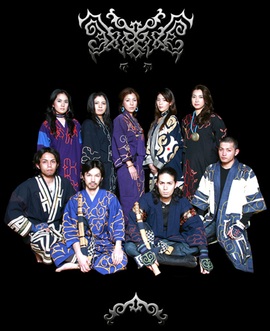
Better times for the Ainu in Japan? There is an “revival of ethnic pride” going on in Japan according to ap.

At the forefront are the Ainu Rebels (image). They use music and dance to rebel against a history of institutionalized discrimination. They celebrate being an Ainu by mixing traditional dress, dance and language with hip-hop and rap.

And they’re getting an enthusiastic response from young Japanese. T-shirts, vests and handbags adorned with Ainu motifs are selling well, and Ainu rock musician Oki Kano is making it big with a band featuring the tonkori, a sort of Ainu guitar, ap journalist Malcolm Foster writes. Ethnicity is hip in Japan according to linguist John Maher.

When I visited the indigenous music festival Riddu Riddu in Northern Norway a few years ago, I noticed the strong ties between the Saami and other indigenous people around the world. Riddu Riddu started as a Saami festival but developped into an international festival with guests from Papua New Guinea, Botswana, New Zealand, Nunavut and Greenland.

Contact with other indigenous people was also critical to the Ainu revival. Mina Sakai from the Ainu Rebels tells that her awareness came at age 16 when, on a cultural exchange trip to Canada, she was struck by the passionate way Canadian indigenous people danced and sang:

“I was shocked. They were so cool and so proud of being native Canadians. I realized that I have a beautiful culture and strong roots. I decided that I should be a proud Ainu and express that in my life.”

In June, Japan’s parliament recognized the Ainu as an indigenous people – a major shift from the mid-1980s when Yasuhiro Nakasone, the then prime minister, declared that Japan was a homogenous nation with no minorities.

>> read the whole ap-story “Ainu rise up from the margins of society in Japan, celebrate long-hidden culture”

The article also mentions Ann-Elise Lewallen, an American cultural anthropologist at Hokkaido University who has worked closely with the Ainu community for 10 years. But I could not find info about her online.

LINKS UPDATED 18.7.2024

SEE ALSO:

Inuit language thrives in Greenland

“Pop culture is a powerful tool to promote national integration”

The cultural nationalism of citizenship in Japan and other places

How Media and Digital Technology Empower Indigenous Survival

“But We Are Still Native People” – Tad McIlwraith’s dissertation is online

Indigenous people no victims of globalisation: Alex Golubs dissertation on mining and indigenous people

Open Access to Indigenous Research in Norway

How filmmaking is reviving shamanism

Thomas Hylland Eriksen on Cosmoculture: Preferably more art than books!

ainu rebels screenshot

Better times for the Ainu in Japan? There is an "revival of ethnic pride" going on in Japan according to ap.

At the forefront are the Ainu Rebels (image). They use music and dance to rebel against a history of…

Read more